
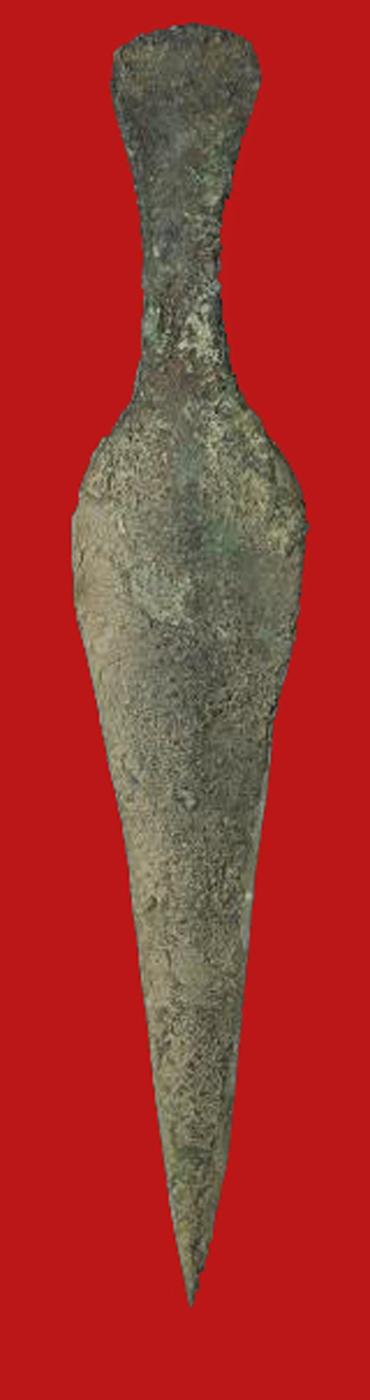

A Breathtaking & Original Museum Piece. An Ancient Greek Leaf Shaped Sword or Long Dagger From The Greco-Persian Wars Era, From the Time of the Spartans at Thermopylae, To Alexander the Great's Conquest of Persia & Egypt
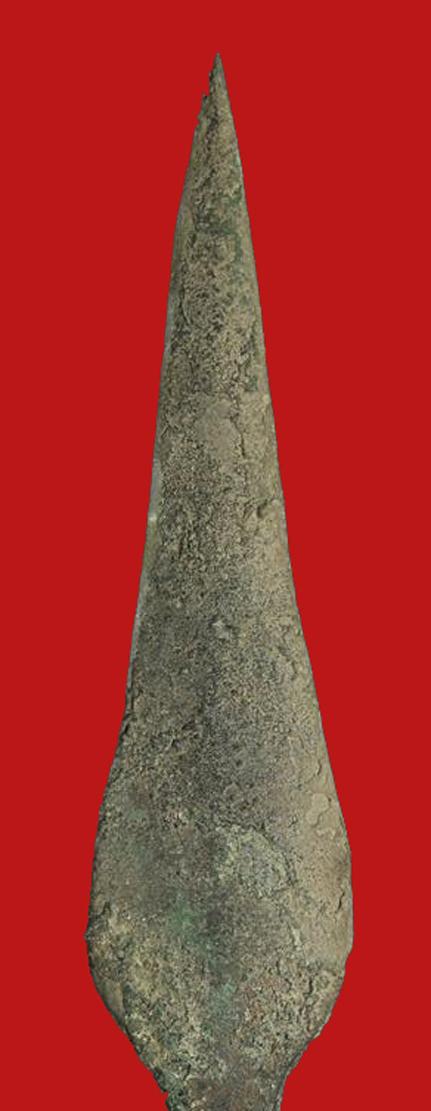
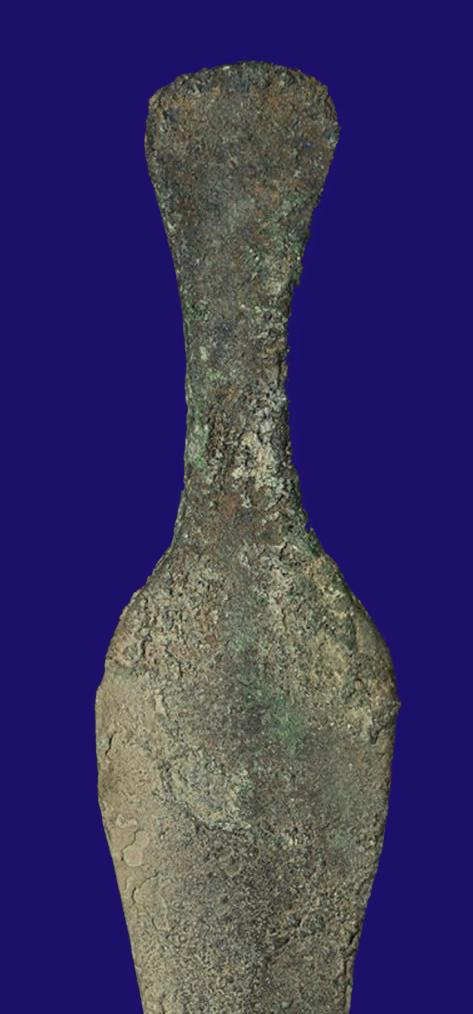
An original and most rare ancient Greek warrior's short sword or long dagger, circa 500 to 300 b.c. In superb excavated condition, and remarkable for its age, with light areas of encrustations and an overall delightful patina, all one piece cast construction.
Likely the short sword or long dagger of a warrior from the time of the Spartans at Thermopylae to Alexander the Great {son of Philip II of Macedon} and his renown conquests of the then known world.
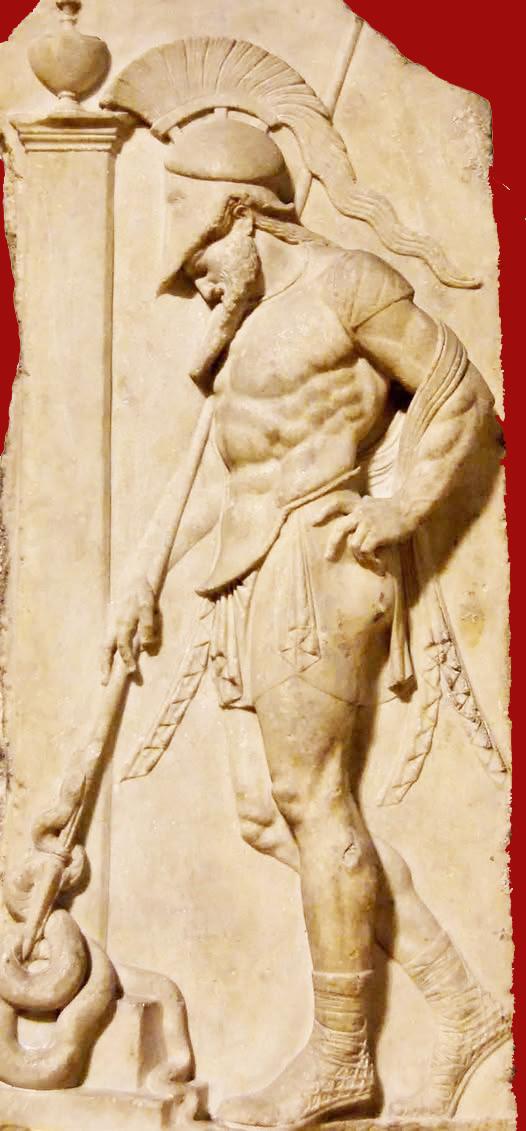
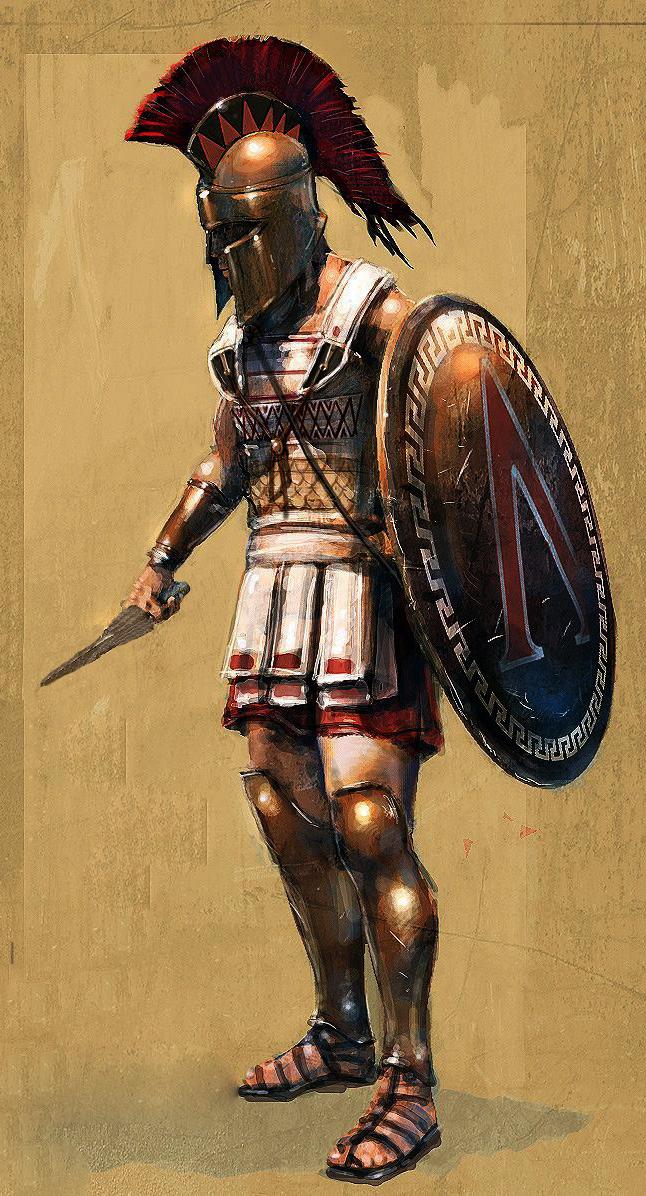
Also as used at the Battle of Thermopylae which was fought between an alliance of Greek city-states, led by King Leonidas I of Sparta, and the Achaemenid Empire of Xerxes I.
It was fought over the course of three days, during the second Persian invasion of Greece. The battle took place simultaneously with the naval battle at Artemisium. It was held at the narrow coastal pass of Thermopylae ("The Hot Gates") in August or September 480 BC.
The Persian invasion was a delayed response to the defeat of the first Persian invasion of Greece, which had been ended by the Athenian victory at the Battle of Marathon in 490 BC. By 480 BC, Xerxes had amassed a massive army and navy and set out to conquer all of Greece. The Athenian politician and general Themistocles had proposed that the allied Greeks block the advance of the Persian army at the pass of Thermopylae, while simultaneously blocking the Persian navy at the Straits of Artemisium.
A Greek force of approximately 7,000 men marched north to block the pass in the middle of 480 BC. The Persian army was rumoured to have numbered over one million soldiers. Herodotus, a contemporary writer put the Persian army strength as one million and went to great pains to describe how they were counted in groups of ten thousand at a review of the troops. Simonides went as far as to put the Persian number at three million. Today, it is considered to have been much smaller. Scholars report various figures ranging between about 100,000 and 150,000 soldiers. The Persian army arrived at the pass in late August or early September. The vastly outnumbered Greeks held off the Persians for seven days (including three of battle) before the rear-guard was annihilated in one of history's most famous last stands. During two full days of battle, the small force led by Leonidas blocked the only road by which the massive Persian army could pass. After the second day, a local resident named Ephialtes betrayed the Greeks by revealing a small path used by shepherds. It led the Persians behind the Greek lines. Leonidas, aware that his force was being outflanked, dismissed the bulk of the Greek army and remained to guard their retreat with 300 Spartans and 700 Thespians. It has been reported that others also remained, including up to 900 helots and 400 Thebans. The remaining soldiers fought to the death. Most of the Thebans reportedly surrendered. Around 150 years later Alexander the Great, Greece’s most famous king created an Empire that still today resonates in its magnitude. Ancient Greek warriors were still using daggers such as this one. While Alexander's army mainly fielded Pezhetairoi (Foot Companions) as his main force, his army also included some classic Hoplites, either provided by the League of Corinth or from hired mercenaries. Beside these units, the Macedonians also used the so-called Hypaspists, an elite force of units possibly originally fighting as Hoplites and used to guard the exposed right wing of Alexander's phalanx. Today, Alexander the Great is still considered one of the most successful military leaders in history. His conquests shaped not just eastern and western culture but also the history of the world. Alexander was born July 20, 356 BC in Pella, a city in the Ancient Greek Kingdom of Macedonia. As the son of Philip II, King of Macedon, Alexander was raised as a noble Macedonian youth. Learning to read, play the lyre, ride, fight, and hunt were high priorities for Alexander.
As he got older, his father had the famous Aristotle tutor his son. His father knew he could no longer effectively challenge the mind and body of his son. Aristotle educated Alexander and his companions in various disciplines such as medicine, philosophy, morality, religion, logic, and art. Many of his study companions would later become generals in his army.
When King Philip was assassinated, Alexander ascended to the throne at the young age of 20. After quelling small uprisings and rebellions after his father’s death, Alexander began his campaign against the Persian Empire.
Crossing into Asia with over 100,000 men, he began his war against Persia which lasted more than seven years. Alexander displayed tactical brilliance in the fight against the Persian army, remaining undefeated despite having fewer soldiers.
His successes took him to the very edge of India, to the banks of the Ganges River. His armies feared the might of the Indian empires and mutinied, which marked the end of his campaign to the East. He had intended to march further into India, but he was persuaded against it because his soldiers wanted to return to their families.
Alexander died unexpectedly after his return to Babylon. Because his death was sudden and he did not name a successor to his throne, his empire fell into chaos as generals fought to take control.
Every single item from The Lanes Armoury is accompanied by our unique Certificate of Authenticity. Part of our continued dedication to maintain the standards forged by us over the past 100 years of our family’s trading, as Britain’s oldest established, and favourite, armoury and gallery
A bronze short sword or long dagger with leaf-shaped blade, flat-section grip widening at the end. 630 grams, 38.5cm (15 1/4"). very fine condition for age.
Code: 23524
2695.00 GBP