
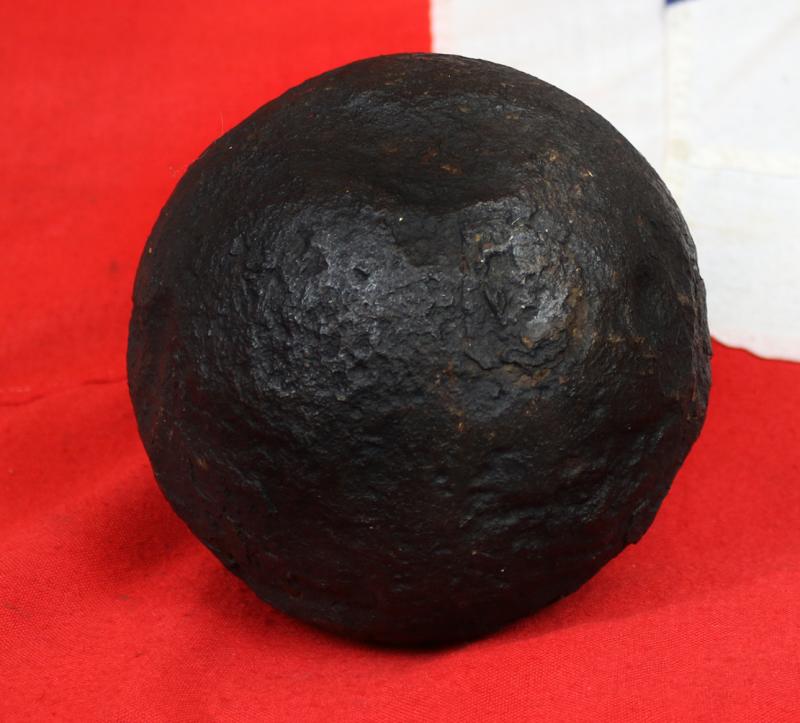
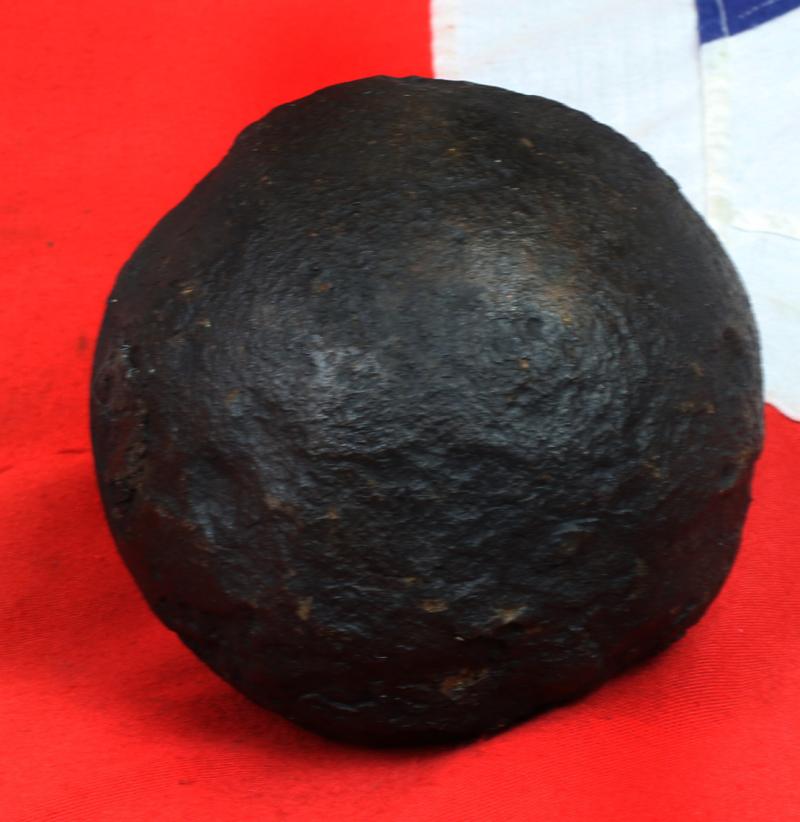
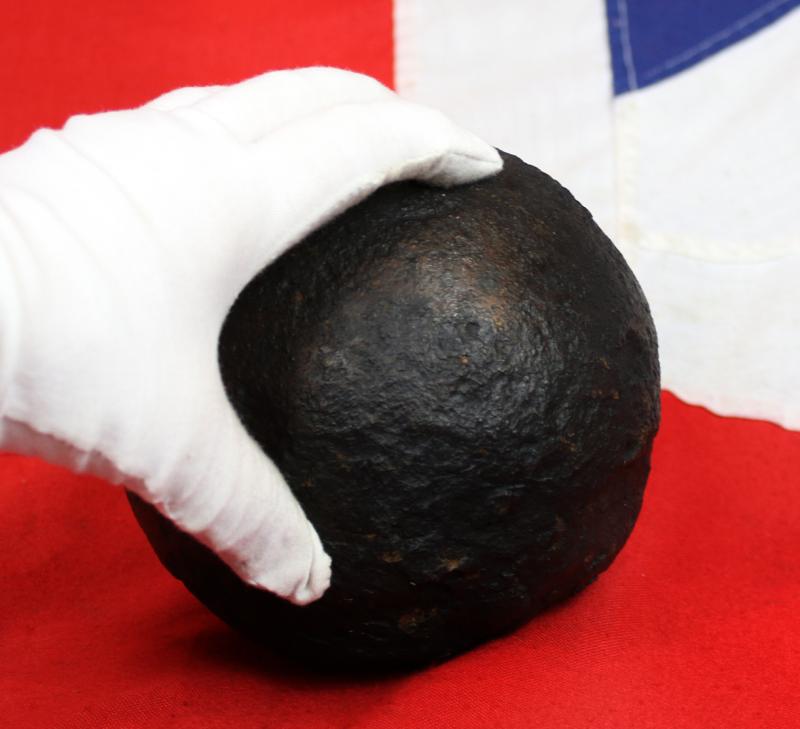
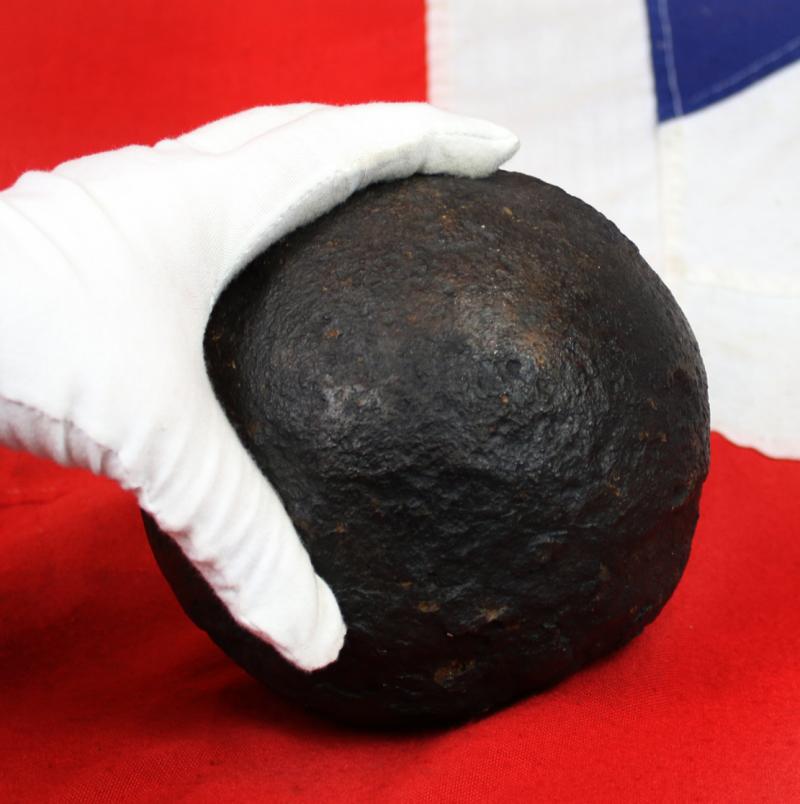

A Fabulous, Original, Royal Naval 32 Pounder Cannon Ball Fired From One Of The 32 Pounder Cannon, The Largest Cannon of the Royal Naval 100 Gunner, Man o'War, Ist Rate Warships In Nelson's Fleet Such As HMS Victory, Into The 'Formidable'
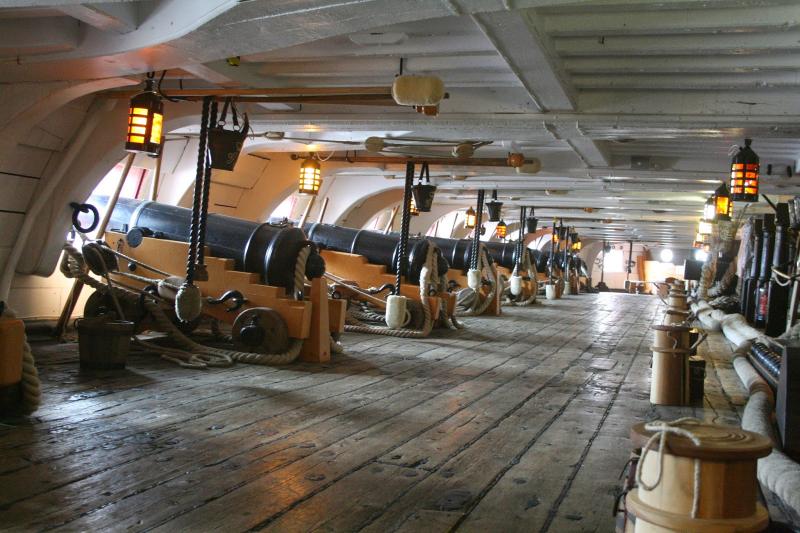
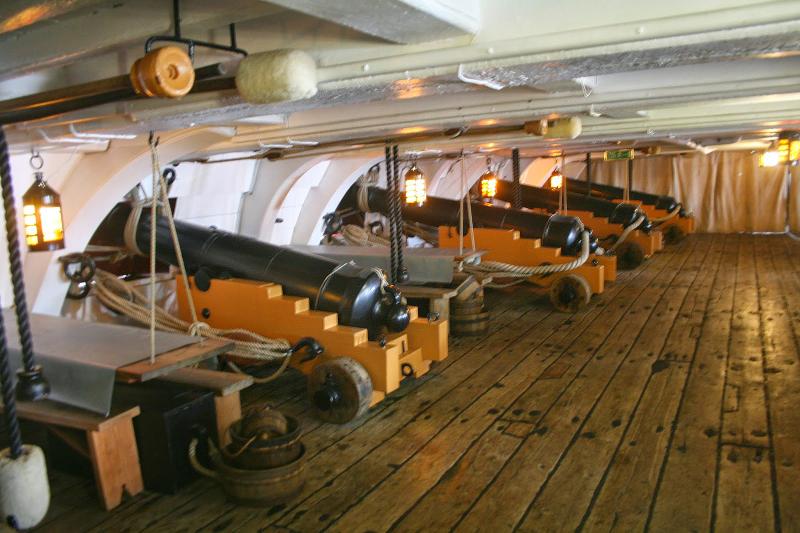
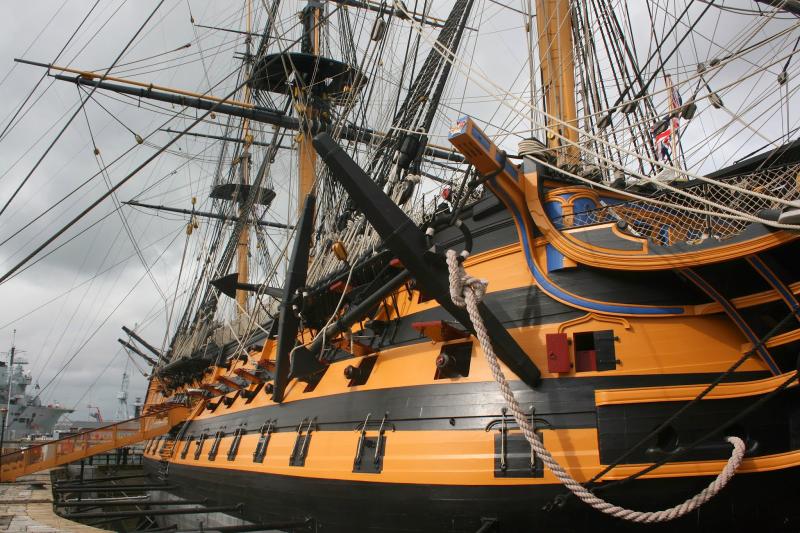
Within “Naval Gunnery”, by Captain H. Garbett R.N., published in 1895, the greater part of the volume deals with the breech-loaders of the 1890s, but, the first chapter discusses the smooth-bore cannon era in considerable detail. A full account is provided of how a 32-pounder – the largest type of gun carried by Victory and her contemporaries – was served. Due to their size and weight these weapons were carried on the “gundeck”, the lowest tier, 30 of them in total on Victory. The next level up, the middle-gundeck, carried 24-pounders, and above that again the upper-gundeck with 12-pounders. Guns of the latter size were also carried in the open on the quarterdeck and forecastle, where the close-range, large calibre Carronades were also mounted.
The ship carried only enough men to crew the guns on one side of the ship only and should it be necessary to fight on both sides simultaneously – as when breaking the French line at Trafalgar – the guns could only be served with half-crews. The weapons were heavy – a 32-pounder’s barrel alone weighed almost three tons – and considerable strength was demanded to run them out and to train them on target.
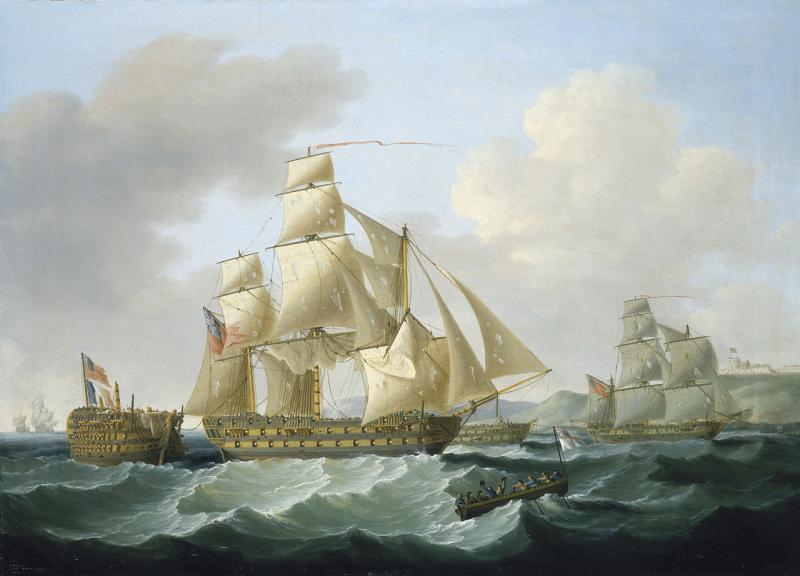
The cannon balls in our collection were recovered from the Formidable while it was in dock in Plymouth and taken to a local hostelry, and kept as a garden ornaments, near the port as a battle souvenir from the last battle in the Trafalgar campaign in the Battle of Cape Ortegal, where it was captured and taken as a prize from north-west Spain that saw Captain Sir Richard Strachan defeat and capture a French squadron under Counter-admiral Pierre Dumanoir le Pelley. It is sometimes referred to as Strachan's Action. The French ship Formidable was captured by the Royal Navy at the Battle of Cape Ortegal on November 4, 1805. Following her capture, she was sailed to a British port and arrived at Plymouth, England, where she was "laid up in ordinary" and later commissioned into the Royal Navy as HMS Brave.
The Formidable, an 80-gun ship of the line, was one of four French ships of the line that escaped the Battle of Trafalgar only to be captured shortly after by a British squadron under the command of Admiral Sir Richard Strachan. She arrived in Plymouth later that year, where the process of condemning the ship as a prize and taking her into the Royal Navy began.
To have been recovered from the French third rate ship of the line we presume it must have hit the ship in combat once fired at her by a 32 pounder, either at Cape Trafalgar or Cape Ortegal.
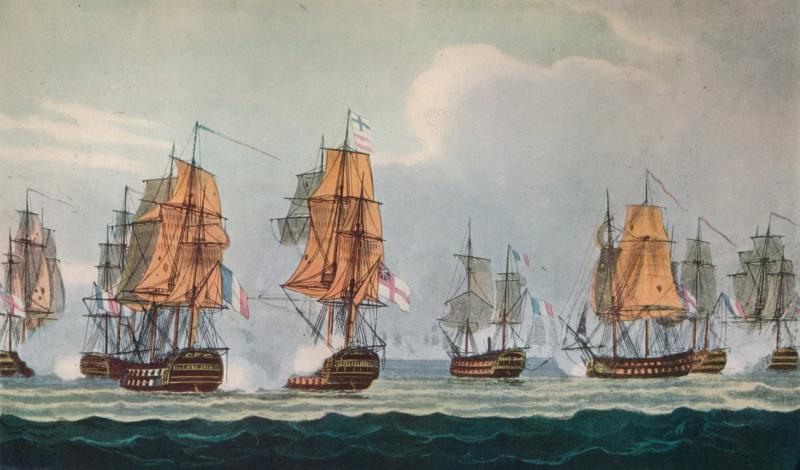
4 November 1805 marks the Battle of Cape Ortegal in the 3rd Coalition War when Captain Sir Richard Strachan’s 4 British ships-of-the-line & 4 frigates defeated Rear Admiral Pierre Dumanoir le Pelley’s 4 French ships-of-the-line. The battle completed the shattering victory at Trafalgar. It ensured British naval dominance for the rest of the Napoleonic Wars.
Dumanoir led the French van at Trafalgar. He escaped & sailed south. On 2 November, he saw 36-gun HMS Phoenix patrolling the area. He chased it. It led him to Strachan, firing its cannons to alert him. Dumanoir fled. Strachan chased him. At 05:45, 4 November, 36-gun HMS Santa Margarita closed on Dumanoir’s rearmost ship, 74-gun Scipion. At 09:30, 36-gun HMS Phoenix joined in. Strachan was 6 miles behind. Scipion fired her stern guns at the frigates. They kept on her, slowing her down. At 11:45, Dumanoir formed line-of-battle. Strachan also formed line, bringing his ships-of-the-line to Dumanoir’s starboard side.
Dumanoir brought his ships around to attack. But Strachan had formed his frigates into a second line on Dumanoir’s port, catching him in a crossfire. By 15:00, Scipion & Dumanoir’s 80-gun Formidable surrendered. 74-guns Duguay Trouin & Montblanc fled. 74-gun HMS Hero & Strachan’s 80-gun HMS Caesar captured them by 15:30. Strachan lost 24 dead, 111 wounded. Dumanoir lost 730 dead/wounded. His ships were commissioned into Britain’s navy. The crews were imprisoned. Ortegal completed Britain’s naval victory. France’s remaining 5 ships were bottled up in Cadiz. Britain now ruled the waves.
On this Pickle Night, November 6th, we remember one of the smallest ships with one of the greatest legacies: HMS Pickle 🎉
Under Lieutenant John Richards Lapenotière, Pickle was “the swiftest ship in Nelson’s fleet,” and after the Battle of Trafalgar she was entrusted with carrying home the official dispatches announcing victory... and the loss of Lord Nelson, 220 years ago this month.
After battling through fierce storms, Lapenotière made landfall at Falmouth on 4 November 1805, then journeyed 271 miles to London by post-chaise, changing horses 21 times in 37 hours to deliver his message to the Admiralty:
“Sir, we have gained a great victory. But we have lost Lord Nelson.”
6 inch solid round shot ball. Weighing in at 28.8 pounds, {weight lost through 1/4 inch surface corruption}
Picture 5 in the gallery is a painting of the Redoubtable and the other ‘prize’ ships captured at Cape Ortegal being towed back to Plymouth.
Photos aboard HMS Victory of the 32 pounder gun deck, one of these cannon, or another like it from Nelson’s fleet, would have fired this cannonball into the Redoubtable. Photos by Francis Sartorius II - http://collections.rmg.co.uk/collections/objects/12066.html, Public Domain, https://commons.wikimedia.org/w/index.php?curid=28503147
Code: 25988
995.00 GBP