

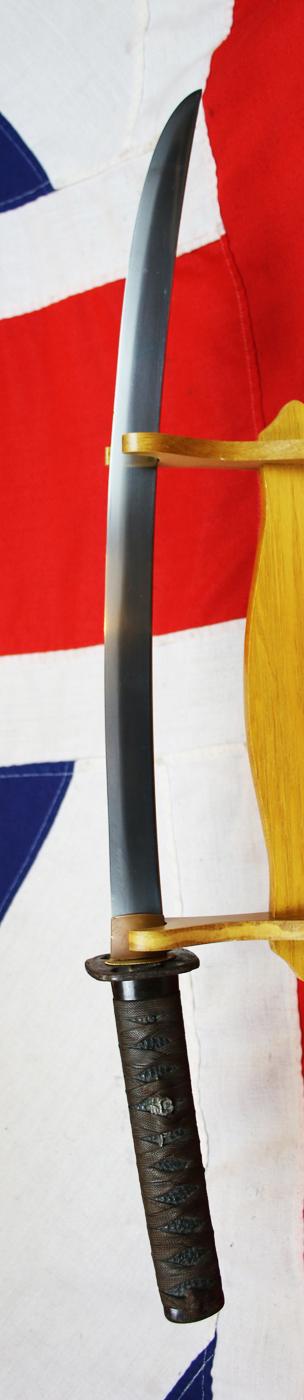
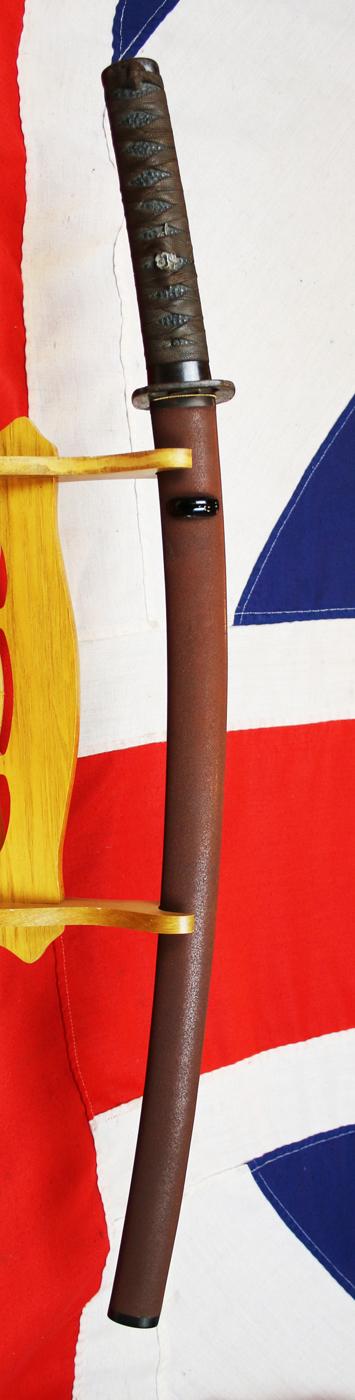
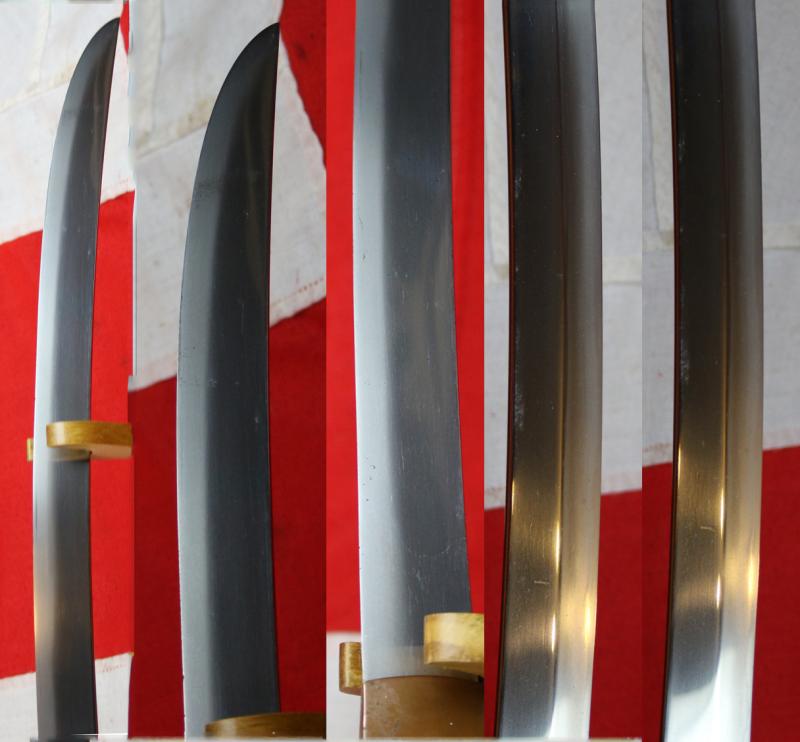
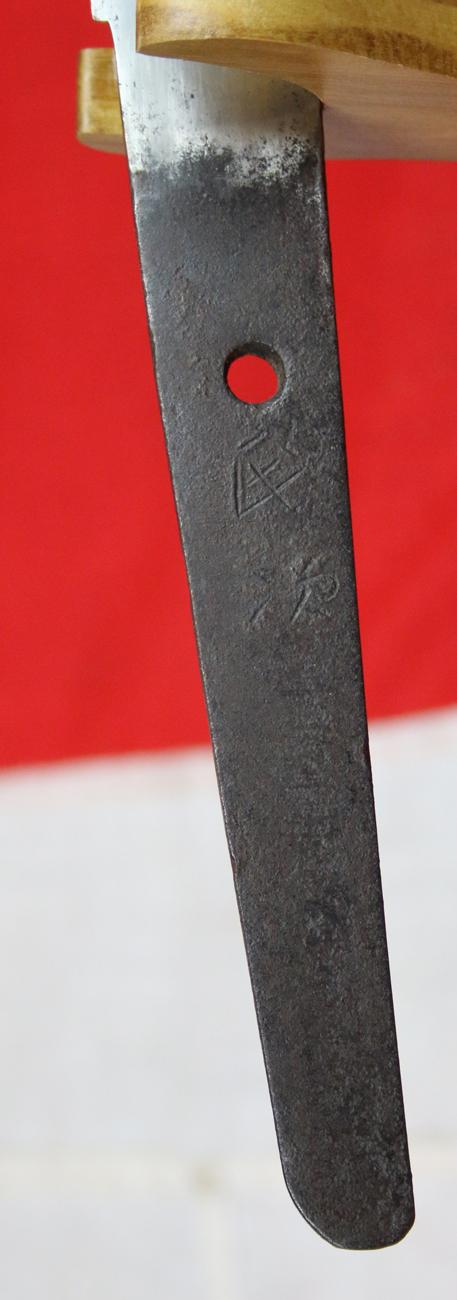
A Very Powerful & Beautiful Shinto Wakazashi, Signed Ujitsugu,With a Rare Chokuto Period Ancient Blade Style, Katakiriha-zukuri (片切刃造り), of 1300 Years Ago in the Nara Era {710 to 794 ad} . Made Circa 1670
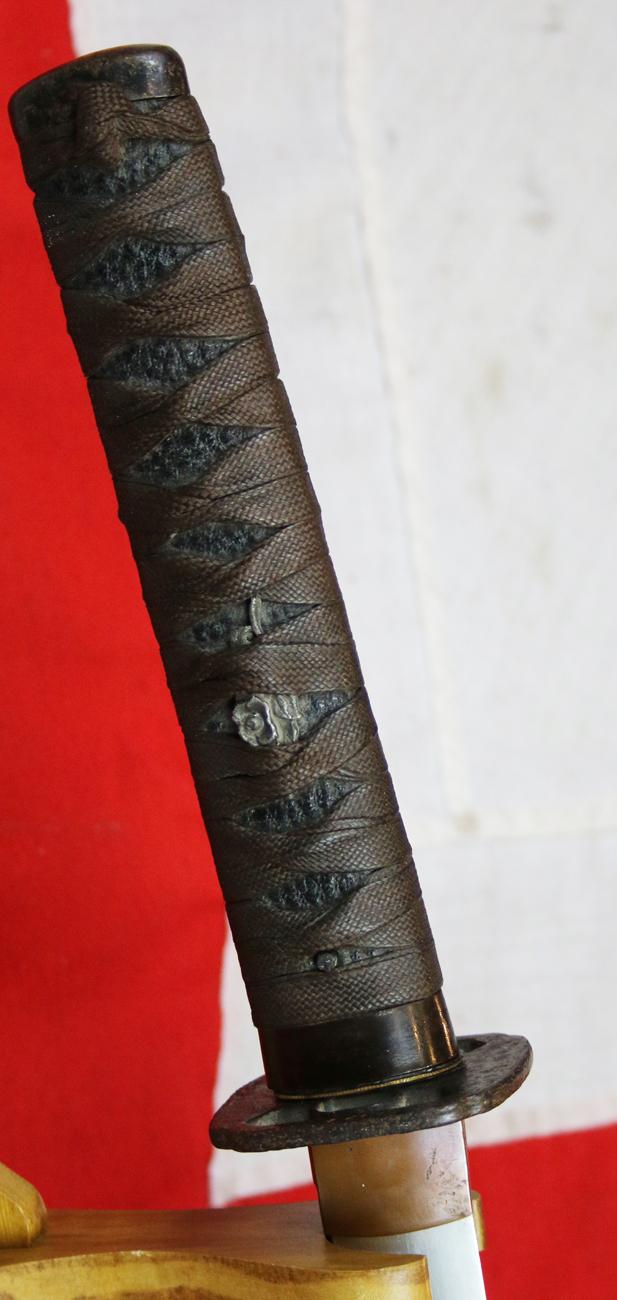
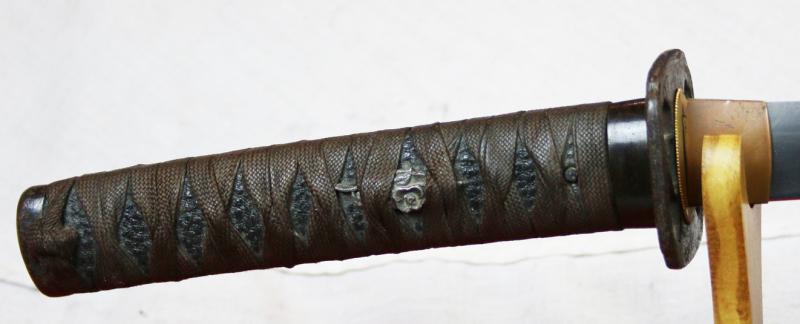
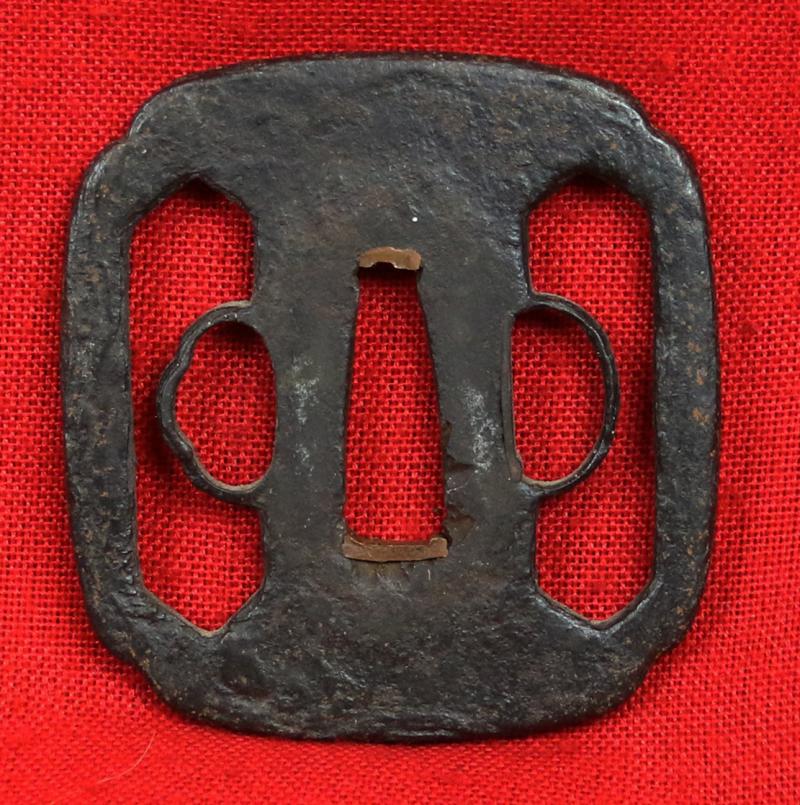
Signed Ujitsugu, fine suguha hamon, bound tsuka with plain iron fuchi-kashira, floral menuki, iron sukashi tsuba, in its warm brown urushi lacquer lacquered saya circa 1670
Ujitsugu (康継): This is a renowned name, especially linked to the Echizen Yasutsugu school, a major sword-making family supported by the Tokugawa shogunate.
Katakiriha-zukuri (片切刃造り) refers to a style of Japanese sword construction where one side of the blade is flat (Hira), and the other side is a cutting edge (Kiriha) somewhat with a profile of a chisel edge. This style is characteristic of ""Chokuto"" (直刀), which are straight swords from the Nara period {710 to 794 ad} and earlier.
Although ""Katakiriha-zukuri"" is an old form of construction, it was revived in the early Edo period. During this time, short swords and "Wakizashi" (side word swords) were made in this style, using the early works as inspiration, as an homage to ancient samurai swords and warfare of 1300 years or more ago.
This style of construction is not only unique in its appearance but also in its functionality. The combination of a flat side and a cutting edge enhances the sword's cutting ability, making it a highly effective weapon. The revival of this style in the Edo period is a testament to the enduring value and appeal of traditional sword-making techniques."
“In these textures lies an extraordinary and unique feature of the sword - the steel itself possesses an intrinsic beauty. The Japanese sword has been appreciated as an art object since its perfection some time during the tenth century AD. Fine swords have been more highly prized than lands or riches, those of superior quality being handed down from generation to generation. In fact, many well-documented swords, whose blades are signed by their makers, survive from nearly a thousand years ago. Recognizable features of the blades of hundreds of schools of sword-making have been punctiliously recorded, and the study of the sword is a guide to the flow of Japanese history.”
Victor Harris
Curator, Assistant Keeper and then Keeper (1998-2003) of the Department of Japanese Antiquities at the British Museum. He studied from 1968-71 under Sato Kenzan, Tokyo National Museum and Society for the Preservation of Japanese Swords
As once told to us by an esteemed regular visitor to us here in our gallery, and the same words that are repeated in his book;
Code: 26068
4850.00 GBP