
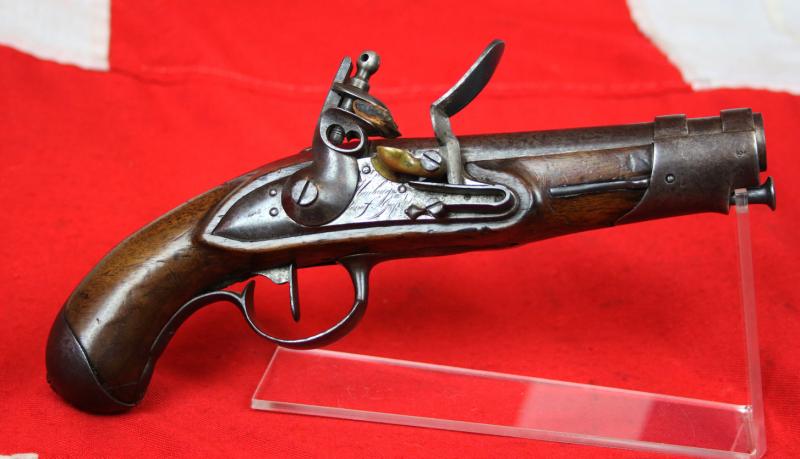
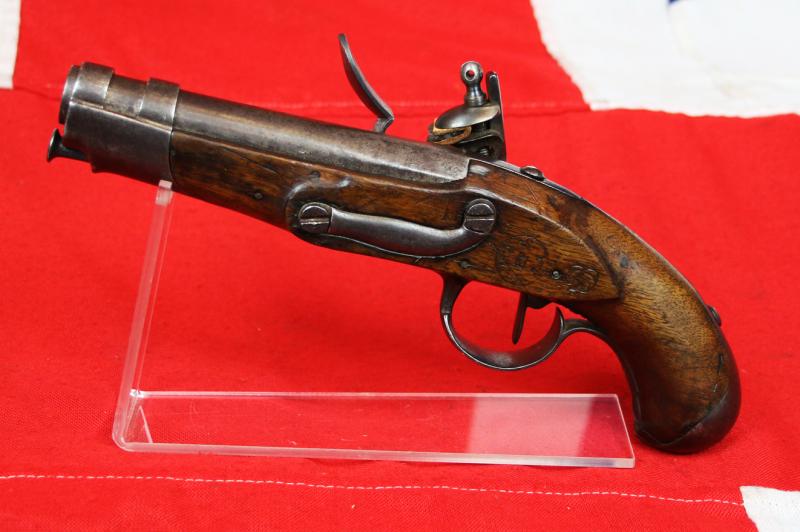
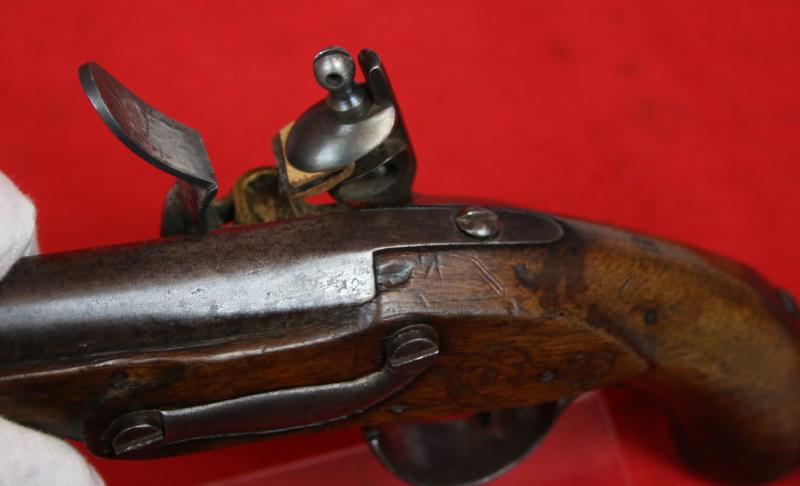
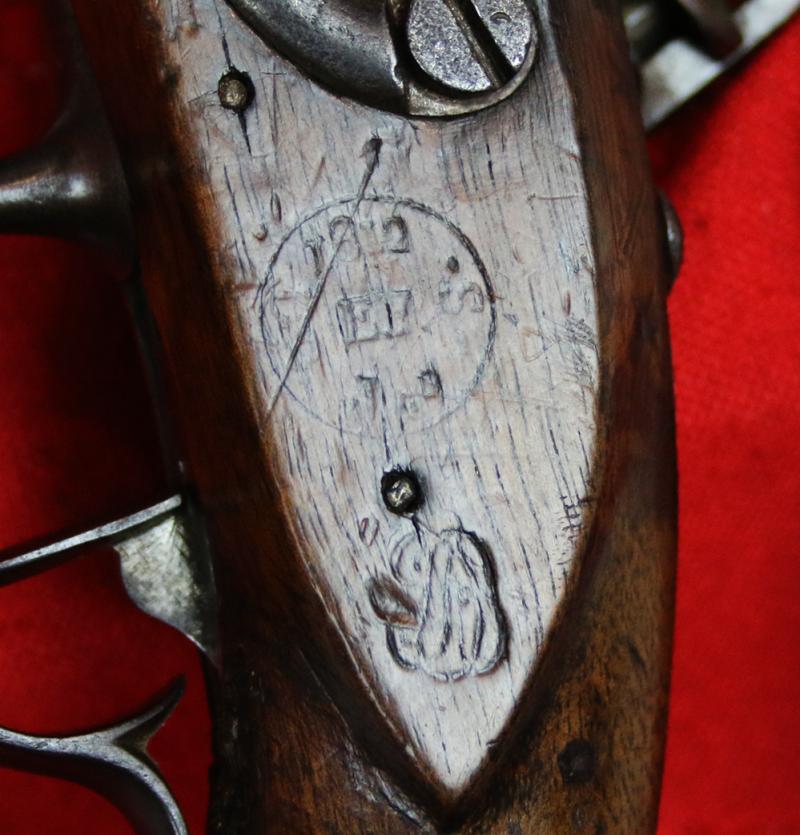
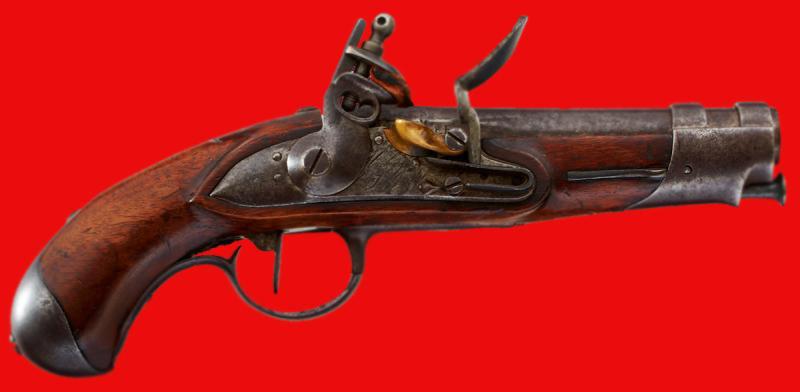
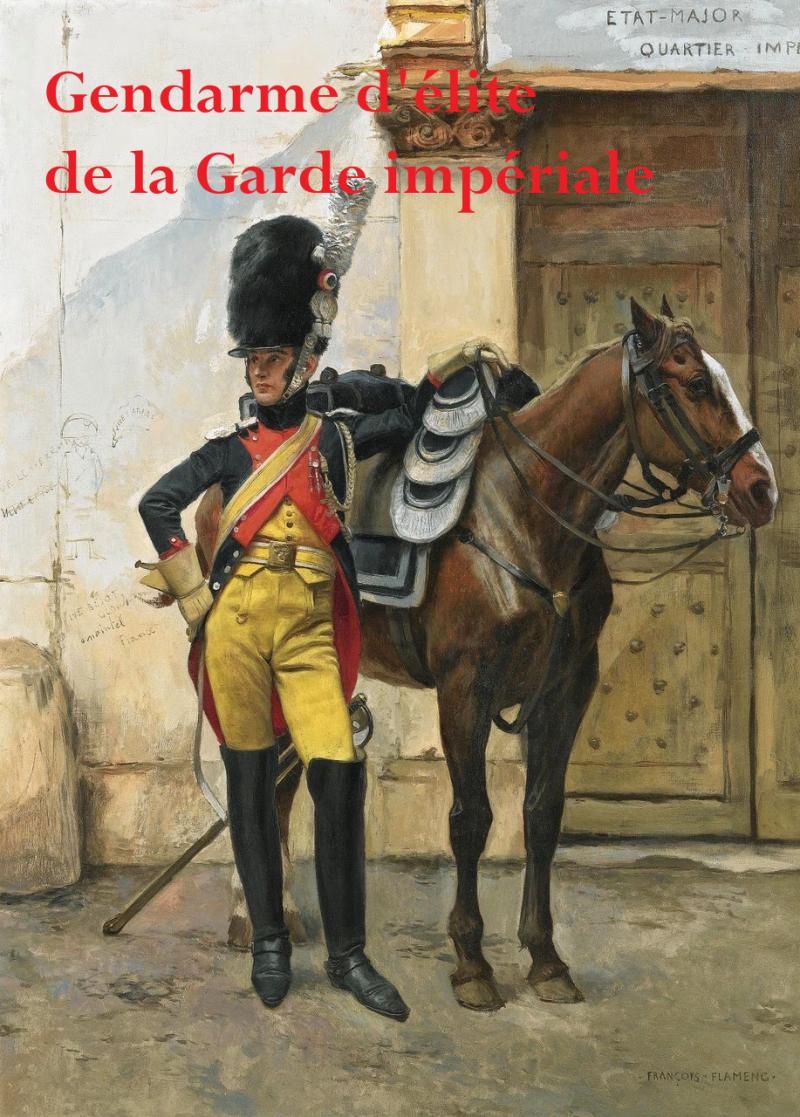
A Rare & Superb, Napoleonic Wars, Year (An) 9 French Gendarmerie Imperial Guard of the Grand Armee Flintlock Pistol. In Great Condition. All Steel Mounts & Made From The Imperial Maubeuge Arsenal Contract, of the Ist Empire
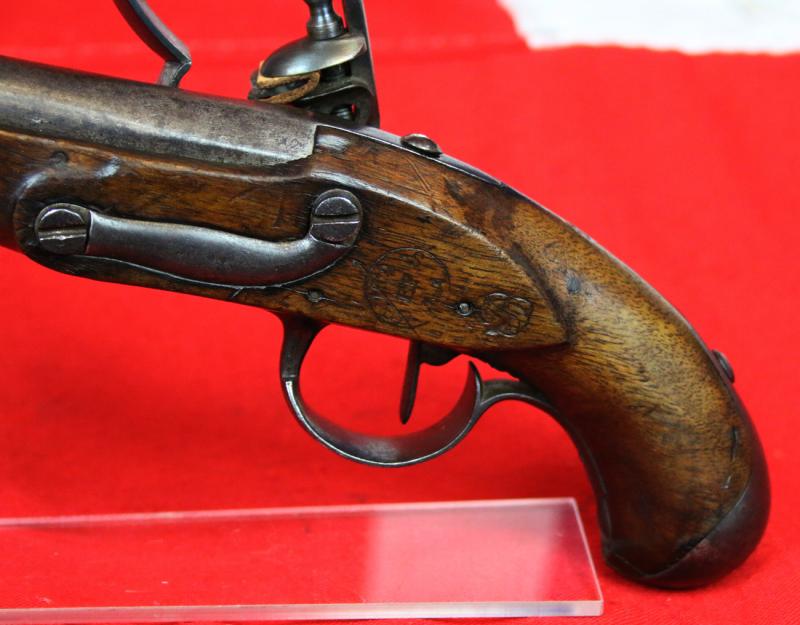
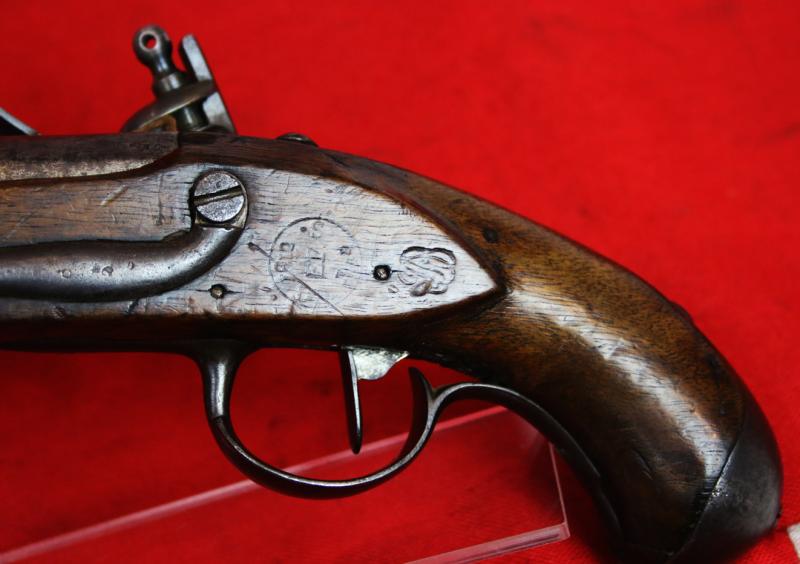
Elite Gendarmes of the Imperial Guard officer's pistol of the Grande Armee. An absolute stunner, in superb condition. Lock engraved Maubeuge Manufacture Imperiale, with a good and crisp action, barrel with proof stamp and. Finest walnut stock stamped and dated 1812 for the Grande Armee and the imminent invasion of Russia, with traditional; birds head butt. Although designed and initially made for the incredibly well respected French armed gendarmerie, it was so good at it’s task, being smaller than the regular officer’s flintlock pistols, but capable of packing a huge punch, it was chosen by many officers of both infantry and cavalry to be their personal carried pistol of choice.
The gendarmerie of France, from the Revolutionary period into the Imperial 1st Empire, was incredibly efficient at keeping the streets of Paris, and beyond, safe. They had a no nonsense attitude {as they still do} and they were feared and respected in equal measure. There was very often a comparison made in the press at the time, that the streets of France were relatively safe, compared to those of England {without armed police}, that were notoriously unsafe. Although, however unsafe in Britain, murder was still relatively rare, possibly, as punishments, when the villain was apprehended for any crime, were most harsh.
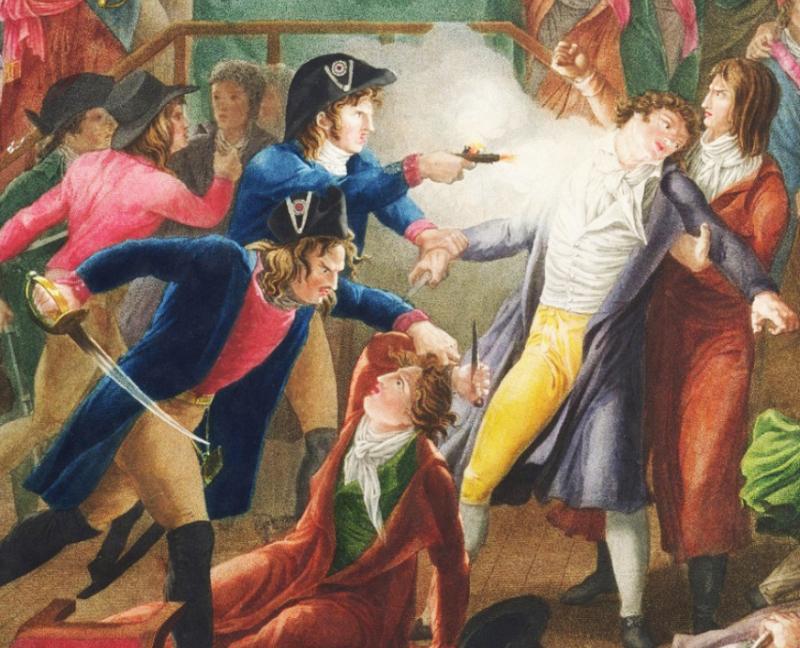
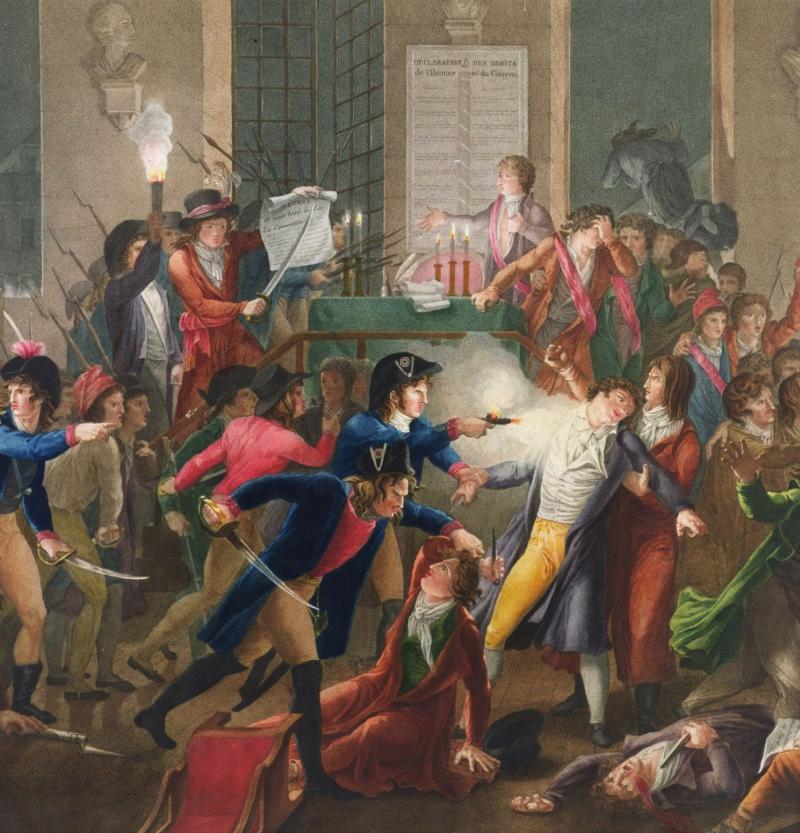
Général de brigade Charles André Merda, baron Meda was a famous French officer. A National Guards commander in the Parisian National Guard from September 1789, then a general of the gendarme from 1794, and he participated in the arrest of |Citizen Revolutionary Maximilien de Robespierre on the night of 9/10 thermidor Year II (27 July 1794) and claimed to have fired the pistol shot which broke Robespierre's jaw and hit Couthon's helper in his leg, {see the painting of him using the very same form of gendarmerie pistol}
Maximilien François Marie Isidore de Robespierre was a French lawyer and statesman, widely recognized as one of the most influential and controversial figures of the French Revolution. Robespierre fervently campaigned for the voting rights of all men and their unimpeded admission to the National Guard.
Additionally he advocated for the right to petition, the right to bear arms in self-defence, and the abolition of the Atlantic slave trade. He was a radical Jacobin leader who came to prominence as a member of the Committee of Public Safety, an administrative body of the First French Republic. His legacy has been heavily influenced by his actual or perceived participation in repression of the Revolution's opponents, but is notable for his progressive views for the time.
As one of the prominent members of the Paris Commune, Robespierre was elected as a deputy to the National Convention in early September 1792. He joined the radical Montagnards, a left-wing faction. However, he faced criticism for purportedly trying to establish either a triumvirate or a dictatorship. In April 1793, Robespierre advocated the mobilization of a sans-culotte army aiming at enforcing revolutionary laws and eliminating any counter-revolutionary elements. This call led to the armed Insurrection of 31 May – 2 June 1793. On 27 July he was appointed a member of the Committee of Public Safety.
Robespierre faced growing disillusionment among others due in part to the politically motivated violence advocated by the Montagnards. Increasingly, members of the Convention turned against him, and accusations piled up on 9 Thermidor. Robespierre was arrested and taken to a prison. Approximately 90 individuals, including Robespierre, were executed without trial in the following days, marking the onset of the Thermidorian Reaction.
As is so often the case, in fact almost without exception, revolutionaries, once successful in casting out the old political caste, and so called enemy of the people, then turn on themselves and
either depose, execute, murder or imprison their Co-conspirators. In fact this writer cannot think of a single revolution in history where this was not the case. For example even in technically non-revolutionary causes, the French, Italian and Belgian resistance groups of WW2, once successfully witnessing the removal of the occupation of their countries by the Third Reich, then set amongst themselves, often attempting to kill their opposing resistance organisations leaders, and or members, in the very brief time that the rule of law was vacant.
One of the greatest exponents of the permanent removal of co-revolutionaries and former ‘comrade allies’ was Josef Stalin
Joseph Stalin executed or caused the assassination of thousands of his co-revolutionaries, particularly during the Great Purge (1936–1938), as he consolidated power and eliminated potential rivals from the early Bolshevik era.
Nearly all of the top party leaders from the time of the 1917 revolution were targeted. Of the 139 Central Committee members elected in 1934, 93 were killed.
High-ranking Bolshevik rivals, including Lev Kamenev, Grigory Zinoviev, and Nikolai Bukharin, were victims of staged show trials that resulted in their execution.
Stalin executed 81 of the 103 generals and admirals in the Red Army, including Mikhail Tukhachevsky.
Stalin had murdered thousands of foreign communists, including over 600 Bulgarian communists and numerous members of the German Communist Party central committee. Many opponents were assassinated by the NKVD (secret police) on Stalin's direct orders, most notably Leon Trotsky in 1940. While total executions during the 1937–1938 "Great Terror" numbered roughly 700,000 to 1.2 million citizens—including many ordinary people—the targeted elimination of party "co-revolutionaries" constituted a large portion of the upper-level purge
“ Revolutionaries follow the ancient principle of the Greek God Kronos, they always eat their young”
{ M. H. }
Code: 26189
1595.00 GBP