

A Beautiful Edo Period Higher Ranking Samurai Folding, Dragon Mon Kusari Katabira Armour. From The Collection of, Likely, The World's Greatest Authority and Author On Japanese Polearms & Their Use & The Henry Russell Robinson Collection
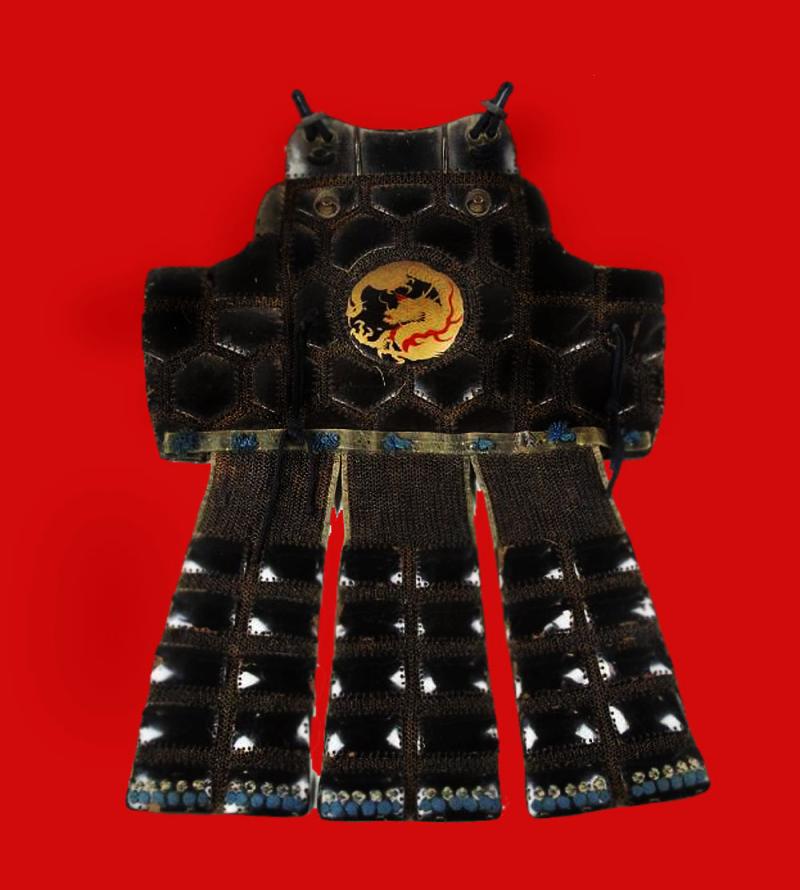
Edo period samurai karuta tatami dou in the hara-ate style. The decorated tatami armour, such as this beautiful example, was usually worn by the high-class Samurai, while the lower class wore more simple versions.
This fabulous armour was previously in two famous collections, first, Henry Russell Robinson's Collection, then, later, sold to the Roald Knutsen Collection. Henry Russell Robinson was Keeper of Armour at the Tower of London, and likely displayed this armour coat in the Tower of London for his exhibition on Japanese Armour there. The Japanese Armour exhibition in 1965, which featured samurai artefacts arranged to demonstrate evolving defensive technologies and cultural contexts, drawing thousands of visitors to the Tower.
The lower ranking samurai would likely wear a folding mail helmet with tatami kusari folding armour. When worn by a higher rank samurai, or daimyo, it would be likely worn with a fine jingasa helmet, such as our example, item code 26208, that came from the same collection.
Kusari Katabira (Chain Mail Armour Coat) is a style of tatami yoroi or "folding armour" used by Daimyo, samurai warriors, their retainers and ashigaru (foot soldiers) during the feudal Sengoku and slightly more peaceful Edo era of Japan.
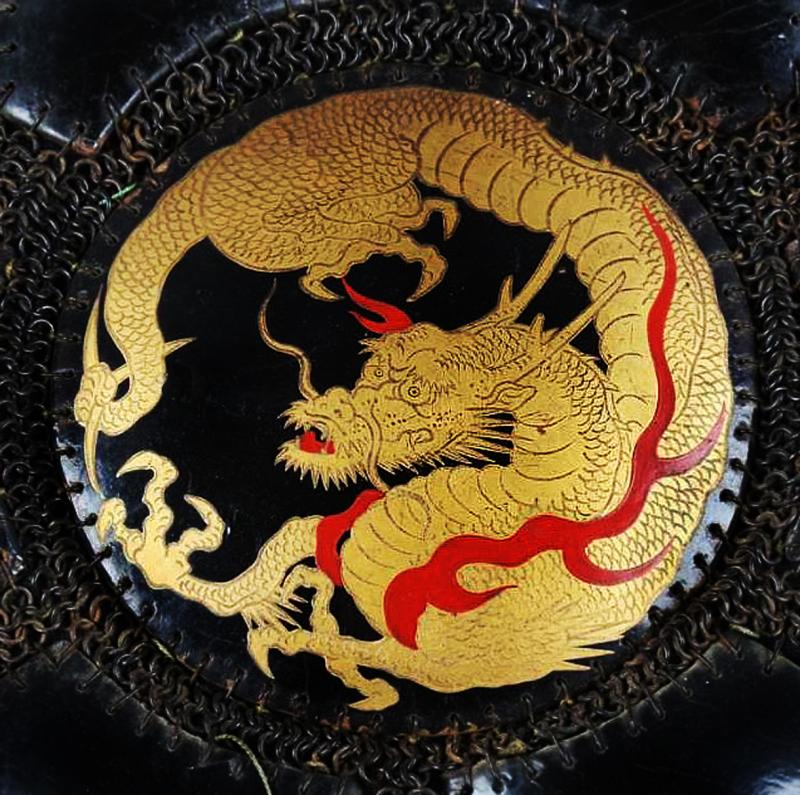
A simply stunning black urushi lacquer, and pure gold decorated, Nichiren-shu Ryu no Maru dragon mon centre panel. Many types of this form of combat armour are plain black, however this is one of the most beautiful we have ever seen.
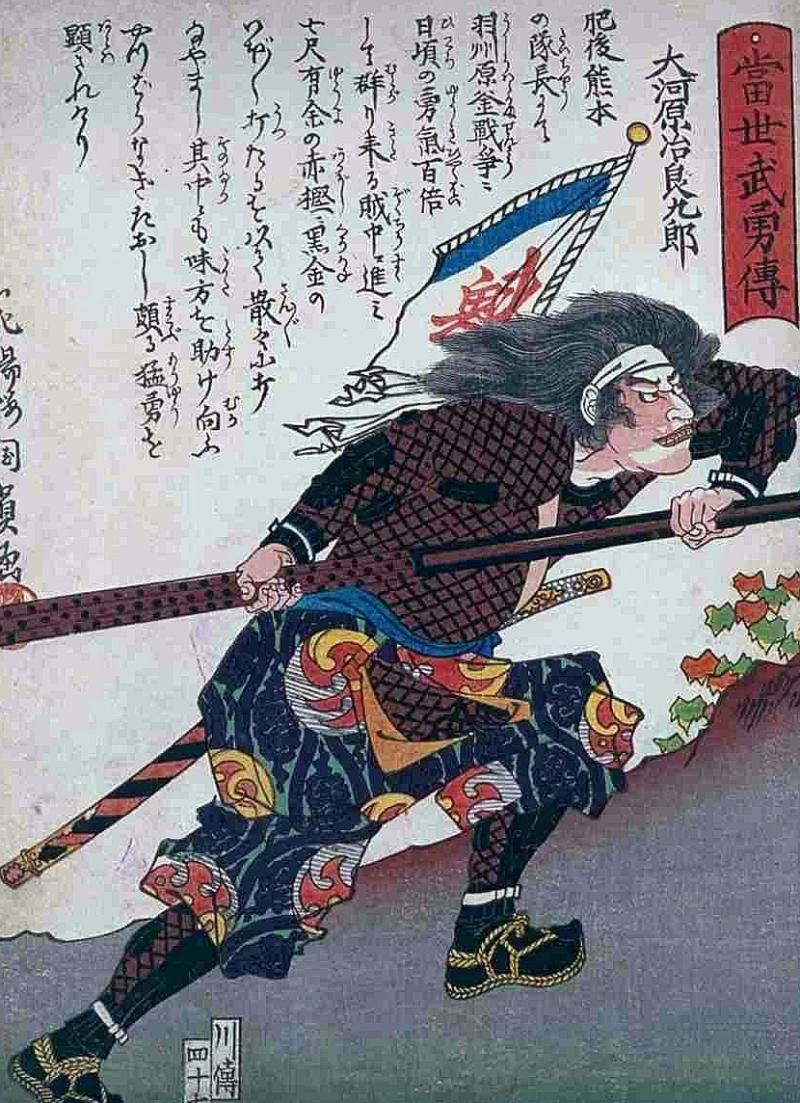
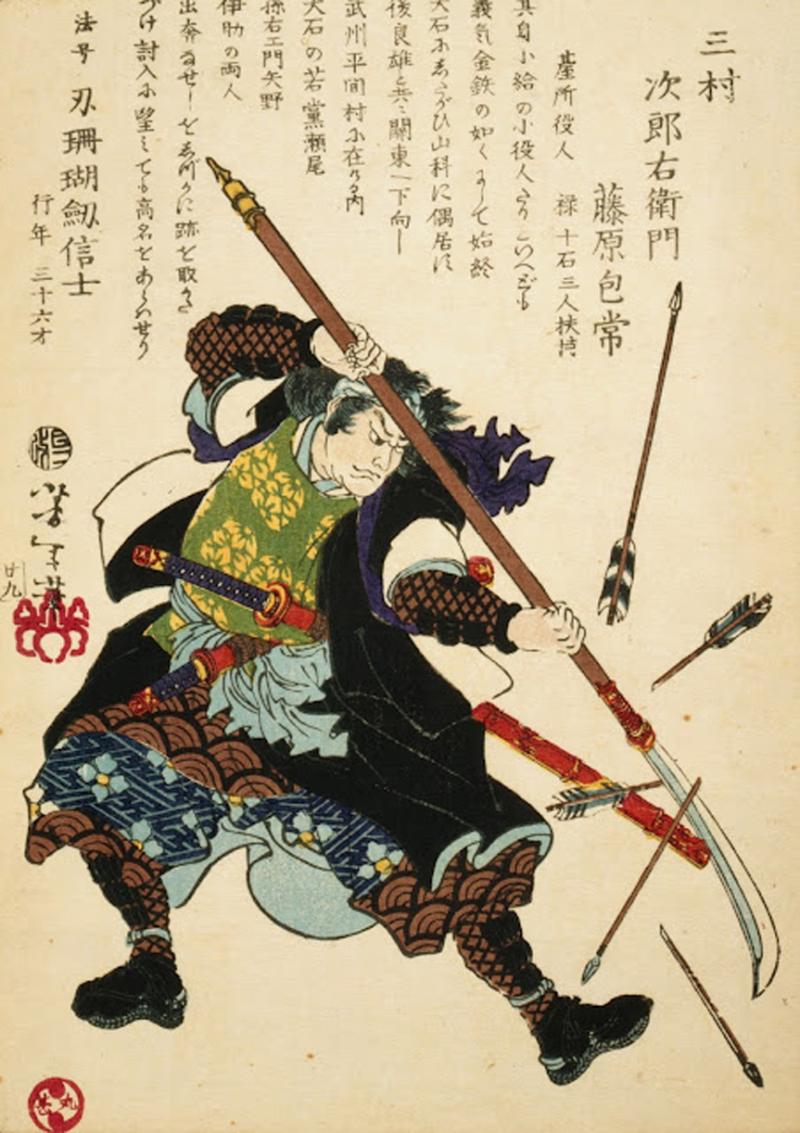
Two woodblock prints in the gallery of samurai in combat wearing kusari chain mail armour
The beauty of this form of samurai armour is that it can also be amazingly displayed, wall mounted, within a large bespoke frame, in the same manner as a silk kimono.
Kusari tatami armour (chain mail folding armour) is a lightweight, portable Japanese defense featuring mail (kusari) sewn onto cloth or leather, often reinforced with small plates. Used during the Sengoku/Edo periods, it allowed for quick deployment, easy transport, and was worn by samurai, retainers, and ashigaru (foot soldiers) for combat.
Part of the tatami (folding) armor family, it was designed to be collapsed or folded for easy storage.
Kusari (Mail): Japanese mail typically consisted of riveted or butted iron rings in a 4-in-1 pattern, often connected to small, square/rectangular plates (karuta) or hexagonal plates (kikko).
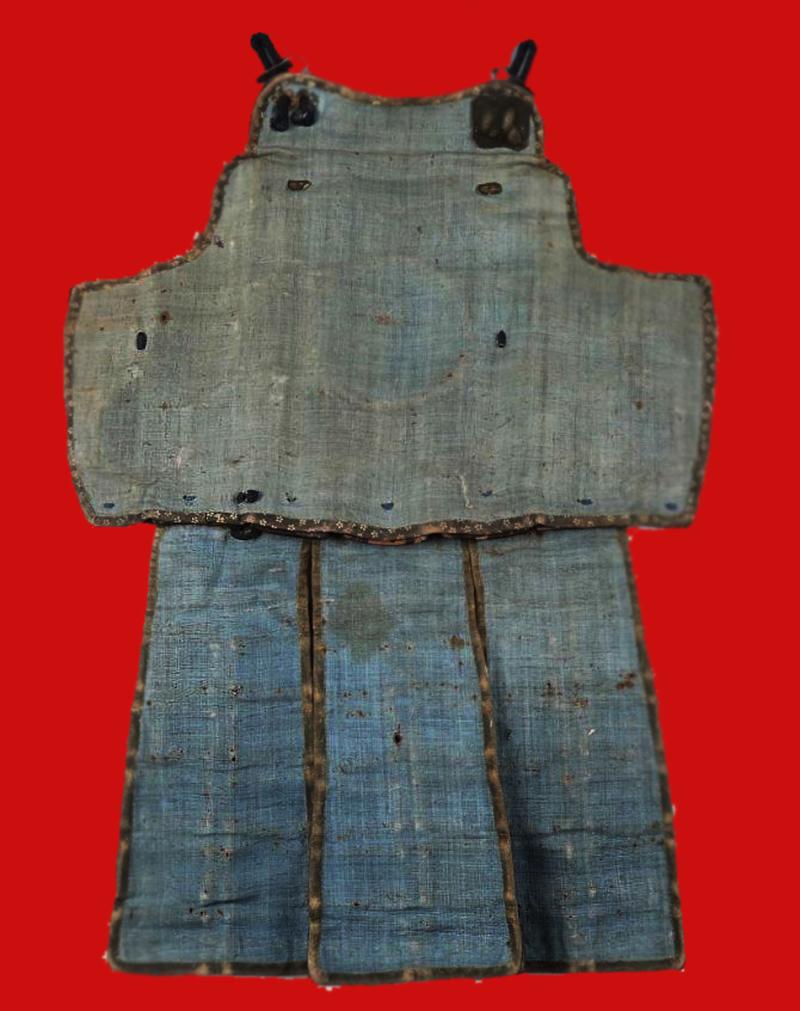
The mail was commonly stitched onto hemp linen or leather backing, forming armored jackets known as kusari katabira or yoroi katabira.
Included kusari tatami dō (cuirass), karuta tatami dō (plate-and-mail cuirass), and kusari gusoku (full suit of mail).
Ideal for scouts, high-ranking samurai on the move, or for wear under regular clothing by guards.
Variations in Tatami Armour
Karuta Tatami: Focuses on small iron or leather squares (karuta) connected by mail, often backed with cloth.
Kikko Tatami: Uses small, hexagonal plates (kikko) hidden or exposed within the mail/cloth structure.
It was formerly part of the Henry Russell Robinson's private collection. (7 May 1920, Hackney, London - 15 January 1978) He became Keeper of Armour at The Tower Of London, and it is likely this suit was part of a display of Japanese armour he organised for display in the Tower of London. The Japanese armour exhibition in 1965, which featured samurai artefacts arranged to demonstrate evolving defensive technologies and cultural contexts, drawing thousands of visitors to the Tower.
He was a British military armourer and historian.He served in the RAF during the Second World War making models interpreting aerial photographs. This was when he met Sir James Mann, Master of the Armouries at the Tower of London. Robinson joined the staff of the Tower Armouries in 1946 as a Temporary Assistant, before rising to Assistant Keeper and finally, in 1970, Keeper of Armour.
Robinson was a founder member and president of the Arms and Armour Society. In 1965, he was elected a Fellow of the Society of Antiquaries of London. In 1977, he was awarded an honorary MA by the University of Newcastle upon Tyne.
Between 1967 and 1969, he (a practical armourer) worked with Charles Daniels to interpret and reconstruct the Roman armour nowadays known as 'lorica segmentata'. He produced a series of reconstructions of the two sub-types of armour from the Roman site at Corbridge and one from Newstead in time for them to be exhibited at the 1969 Congress of Roman Frontier Studies held in Cardiff.
His work on the armour featured in one of his best-known books, The Armour of Imperial Rome. Published in 1975 by Lionel Leventhal at the Arms and Armour Press, it included line illustrations by his friend, Peter Connolly. Robinson's system of categorizing Roman helmets has been widely adopted in the UK and USA but never really found favour in Europe.
Robinson was not only known for Roman armour, since he worked on an exhibition of Japanese armour at the Tower Armouries and subsequently wrote two books on the subject. He was also an authority on Native American artefacts and was responsible for the production of the replica of the revised reconstruction of the Sutton Hoo helmet and wrote a guide to the Stibbert Museum.
Code: 26204
6950.00 GBP