
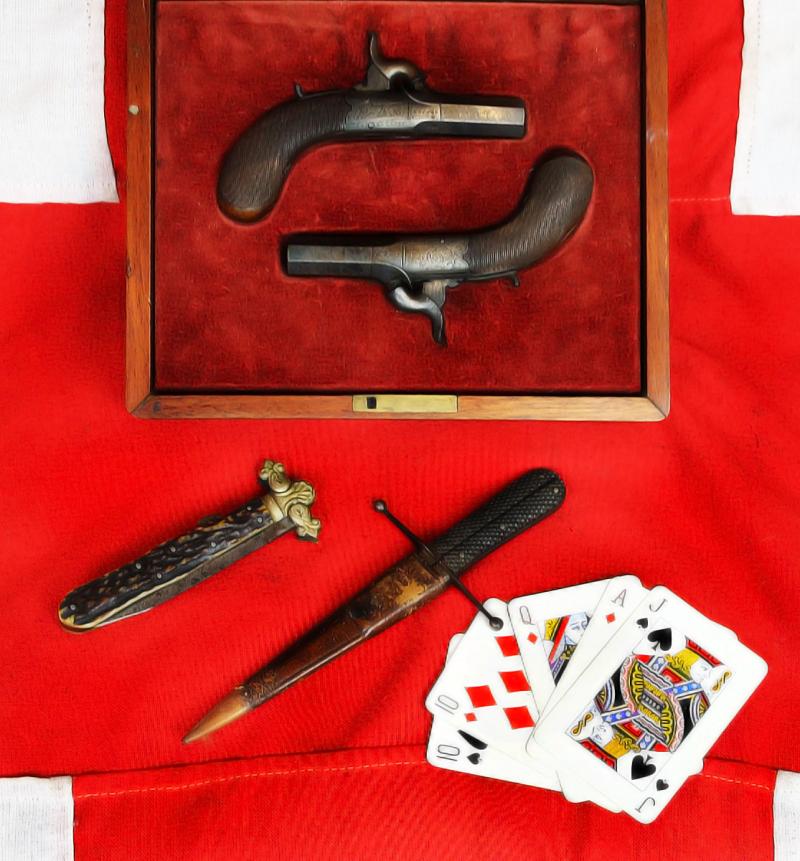
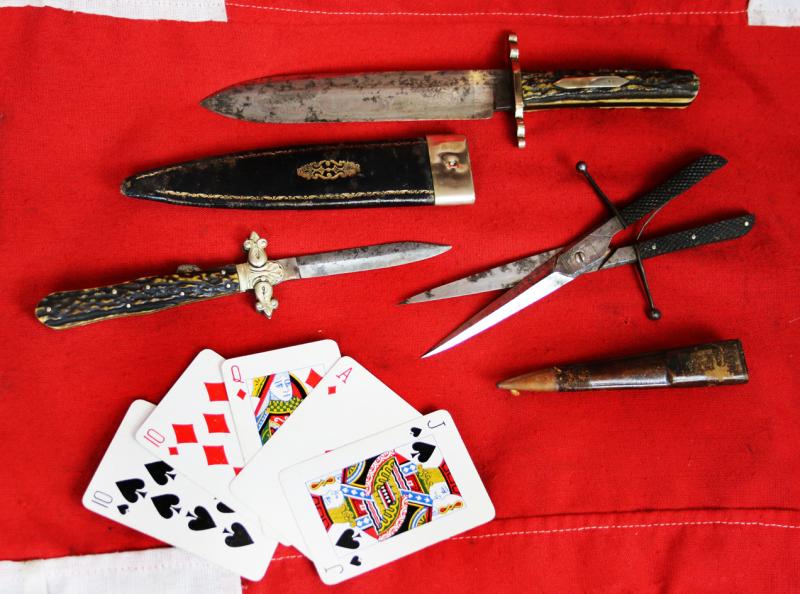
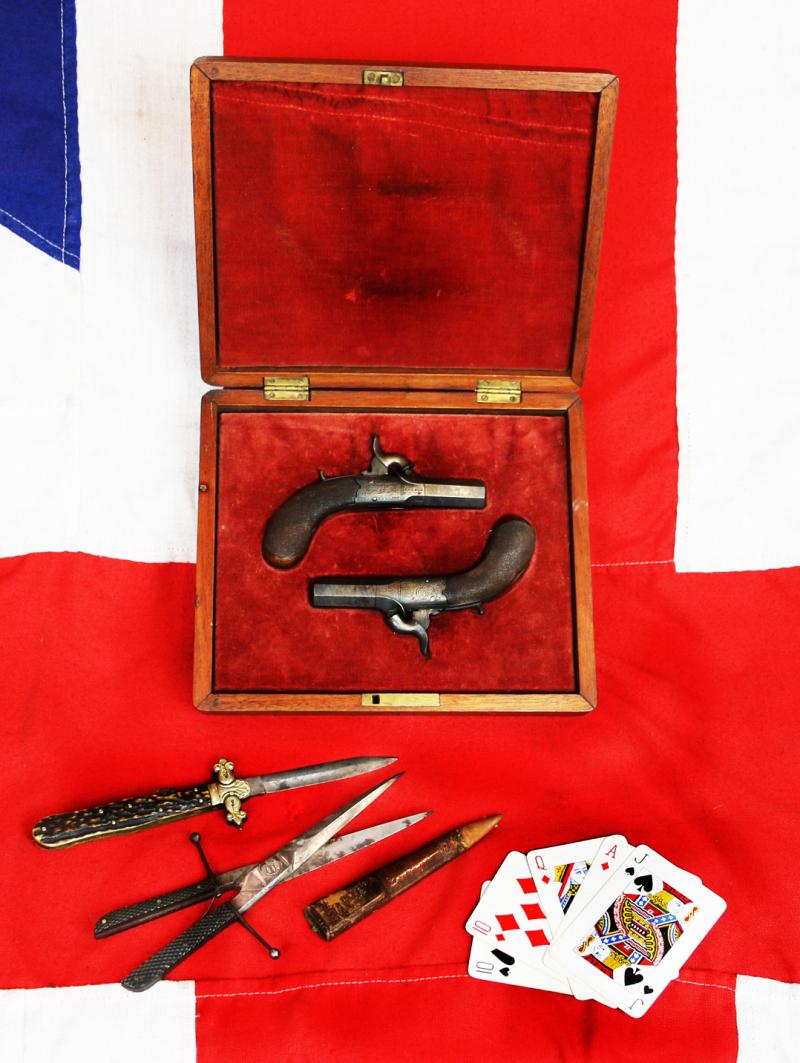
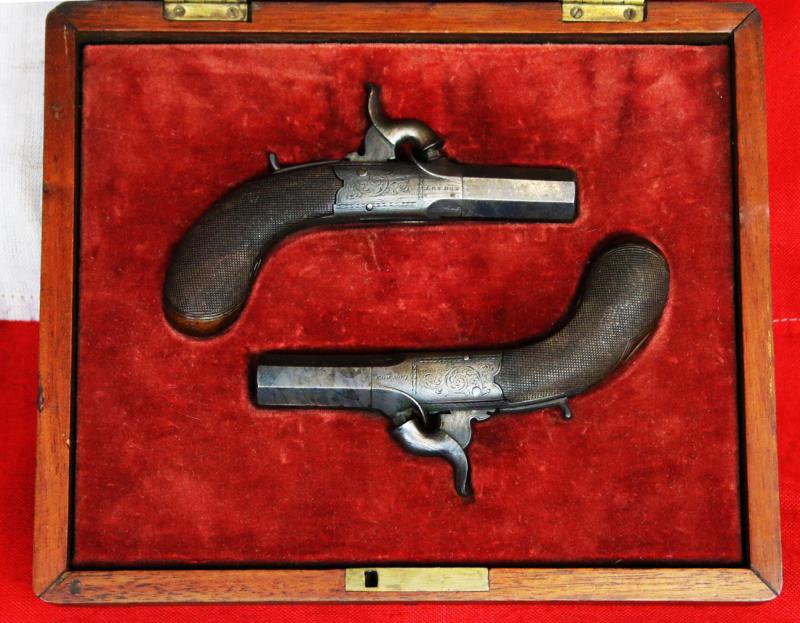
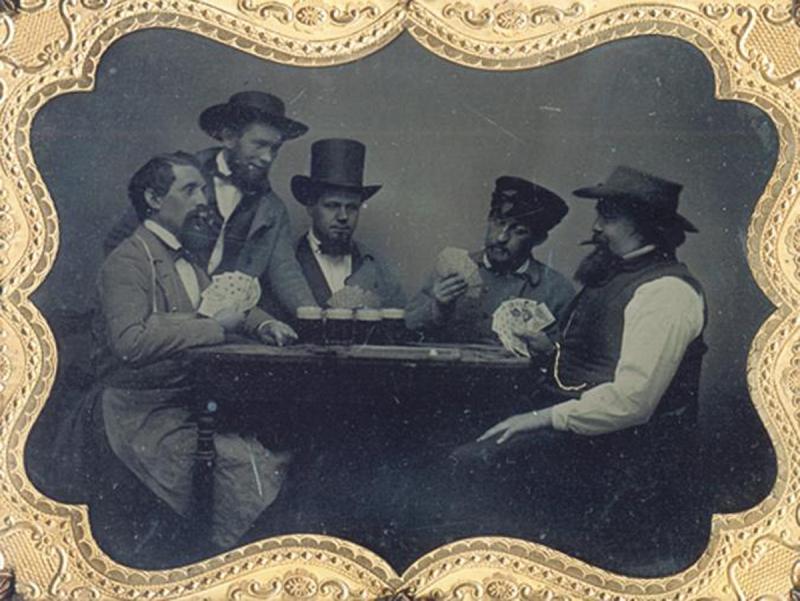
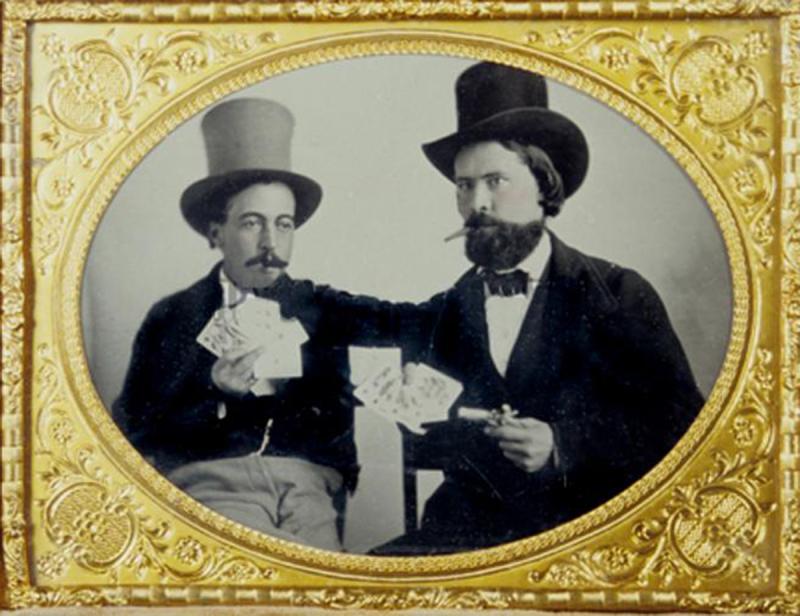
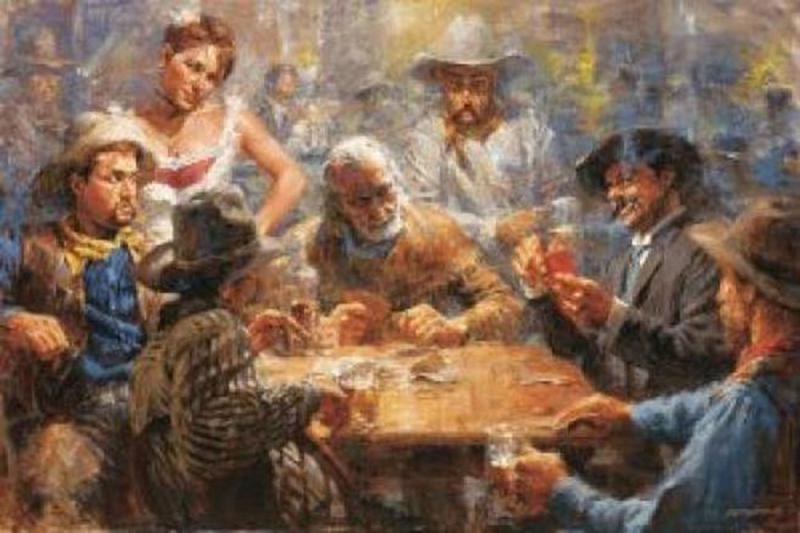
Superb Collection of 19th Cent, American Gamblers Collectors Items. A Fine 'American Cased’ Pair of Derringers by Wilson, a Colt Derringer, American Bowie Knives, One With Scabbard & Another Folding Pocket Bowie & A Scarce Scissors Dagger {Now Sold!}
All the knives and daggers shown, and the Colt Derringer, {not shown here} are now sold!
The heyday of gambling in the west lasted from 1850-1910. Gambling was the number one form of entertainment in the west, and nearly everyone living there engaged in it at one time or another. Cowboys, miners, lumberjacks, businessmen, and lawmen all played games of chance for pleasure and profit. Whenever a new settlement or camp started, one of the first buildings or tents erected would be a gambling hall. As the settlement grew, these halls would become larger and more elaborate in proportion. Gaming halls were typically the largest and most ornately decorated buildings in any town and often housed a bar, stage for entertainment, and hotel rooms for guests. These establishments were a driving force behind the local economy, and many towns measured their prosperity by the number of gambling halls and professional gamblers they had. Towns that were friendly to gaming were typically known to sports as “wide-awake” or “wide-open” for their acceptance of gambling.
Men were not the only ones who played at games of chance, women placed their bets, and the sight of petticoats at the table was regular. Many women played, dealt, or ran their own houses; this choice of profession offered them the opportunity to attain monetary independence and social stature. One of the most famous was Eleanore Dumont, known more crudely in her later years as “Madame Mustache.” Miss Dumont ran several different houses in Nevada, Idaho, Montana, and South Dakota. Another, Alice Ives, started gambling after the death of her husband. Known more popularly as Poker Alice, she was a readily recognized figure in the west for her nearly 40-year-long career. Kitty LeRoy made use of her sex appeal and flamboyant personality as well as excellent gambling ability to become a force of nature in Deadwood. She had multiple husbands and did not hesitate to get rid of men once she was tired of them. Perhaps they were lucky because Kitty also had a reputation for shooting men.
Cattle towns in Texas, Oklahoma, Kansas, and Nebraska, became gambling centers. Thanks to the railroad and cattle industries, a great number of people worked in and around these towns and had plenty of money to wager. Abilene, Dodge City, Wichita, Omaha, and Kansas City all had an atmosphere that was convivial to gaming. Not surprisingly, such an atmosphere also invited trouble, and such towns also developed reputations as lawless and dangerous places.
Most western citizens considered gambling a respectable profession, and those who chose to make a living doing it were respected members of society. “Gambling was not only the principal and best-paying industry of the town at the time, but it was also reckoned among its most respectable,” wrote Bat Masterson in 1907.
With the lack of any form of police or marshal protection within the Wild West frontier, personal protection was not only a desire, but absolutely essential. This form of superb concealed cased pistols for protection, against the murderous folk out to steal and plunder their hard earned gold.
Gambling, and indeed living, in the American frontier towns in the nineteenth century was just as dangerous then as wearing a valuable gold watch is in London today. Where, expecting assistance from a non-existing police protection force, was as vain an expectation then, as it is today.
As usual most of the American historical gamblers accessories, both pistols and knives, were mostly made in England and exported to America for the burgeoning Wild West market. All of this collection, apart from the Colt no3 Derringer were British made and returned to England many decades ago. The pair of small waistcoat pocket size Derringers are cased in the American style.
Code: 26296
Price
on
Request