
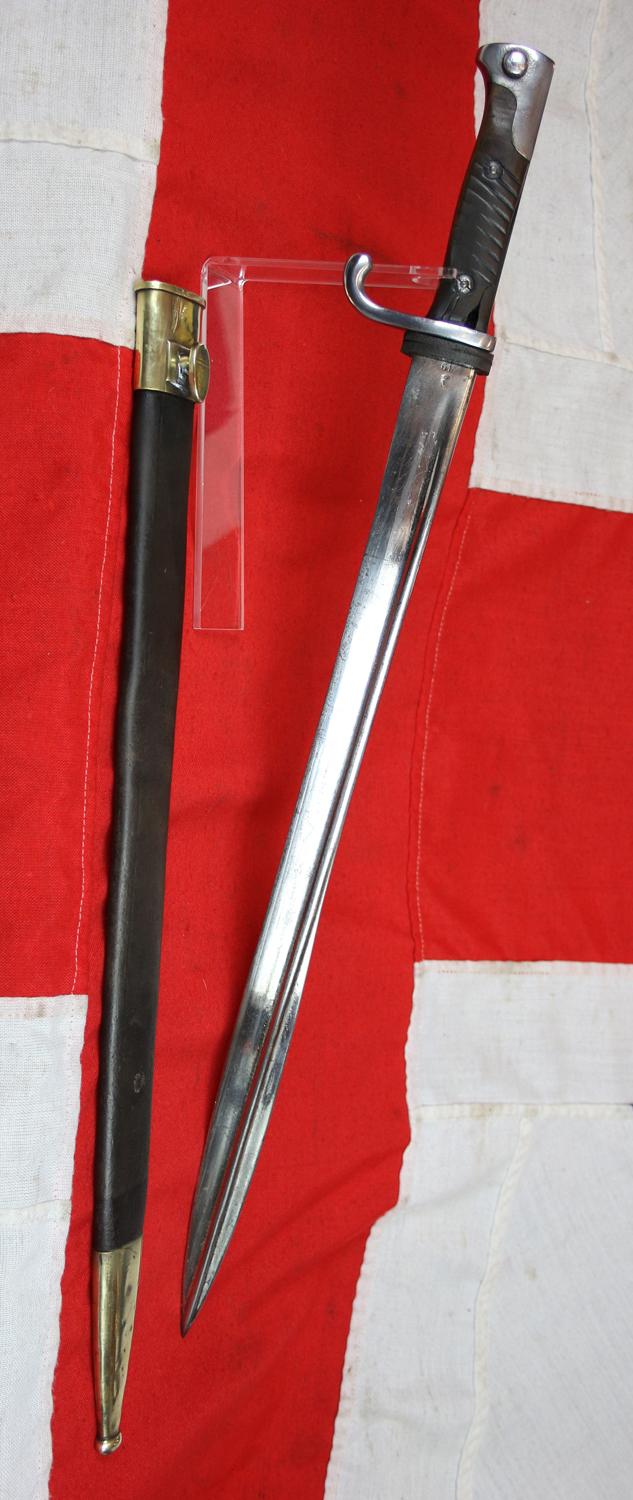
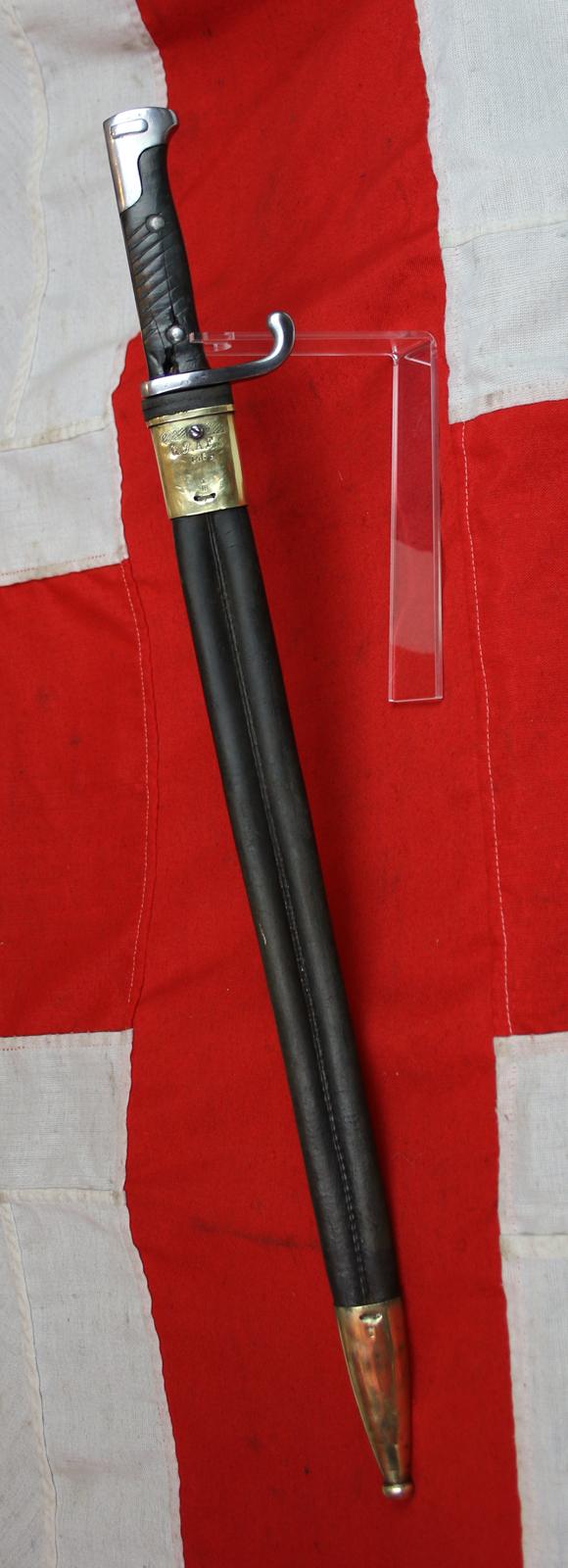
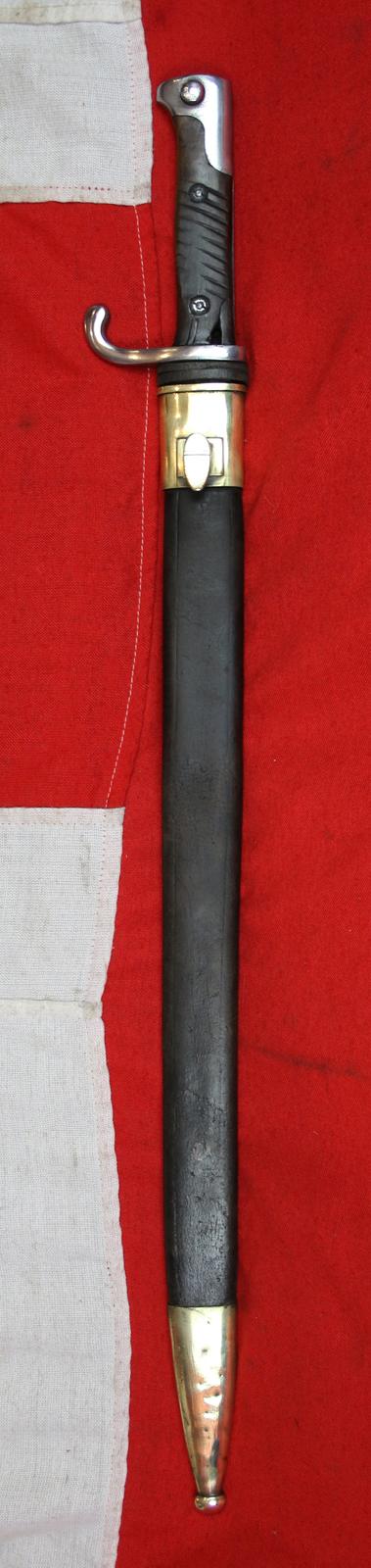
Rare & Highly Desirable Prussian M1860-98 Fusilier Sword-Bayonet, Originally Made For the Dreyse Needle Fire Rifle, Used in the Franco Prussian War Service. Then Upgraded By The Prussian Ordnance For A Mauser Gew98 Guard Reserve Fusiliers Regiment For WW1
This rare recognised service pattern issued bayonet is an absolute corker! After a detailed appraisal we have determined it would be near impossible to find a better example, anywhere, including museum collections, of this highly rare bayonet. Especially so as it is stamped and marked with so many details of its past service history in both iconic Imperial Prussian German wars.
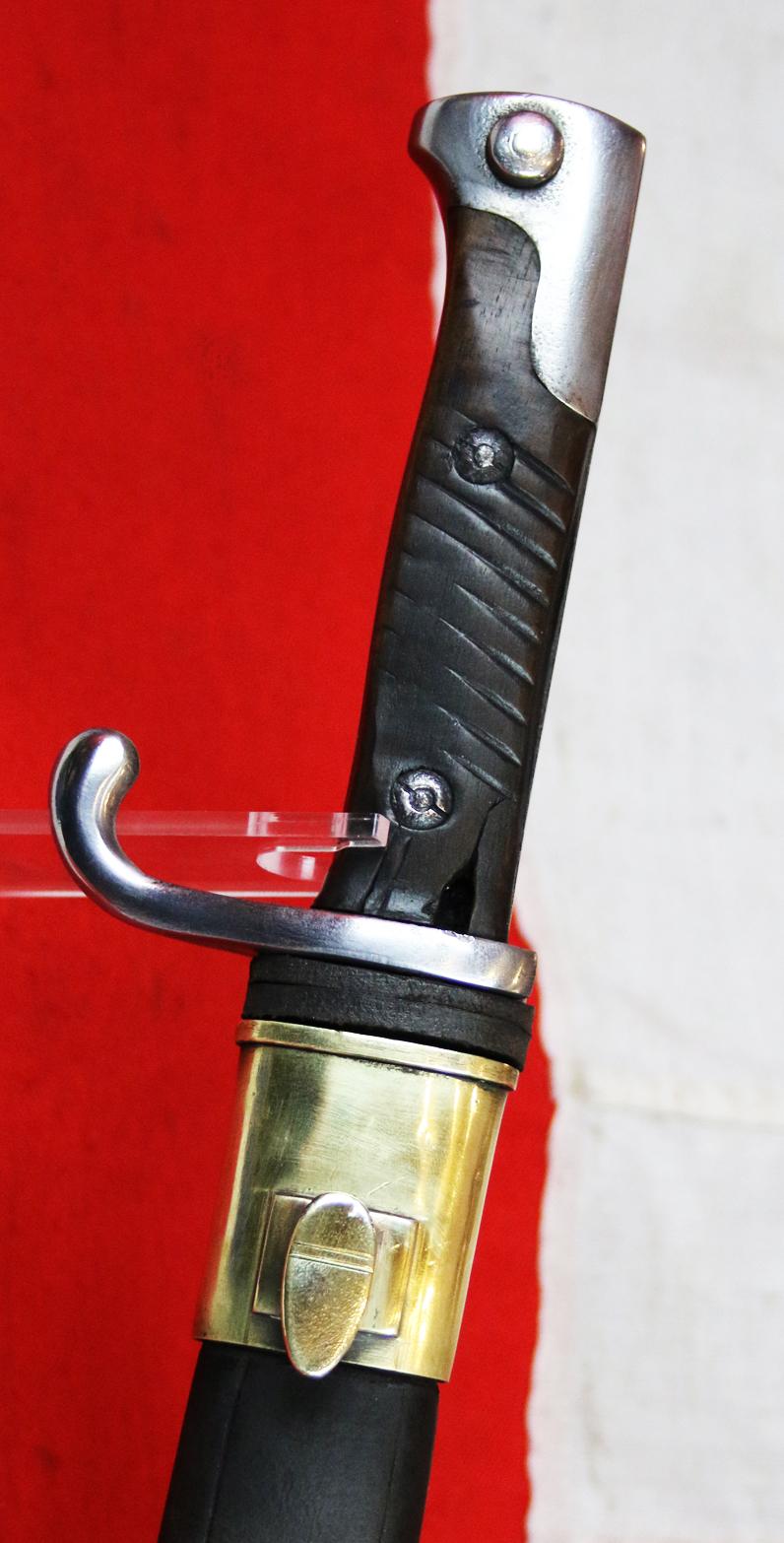
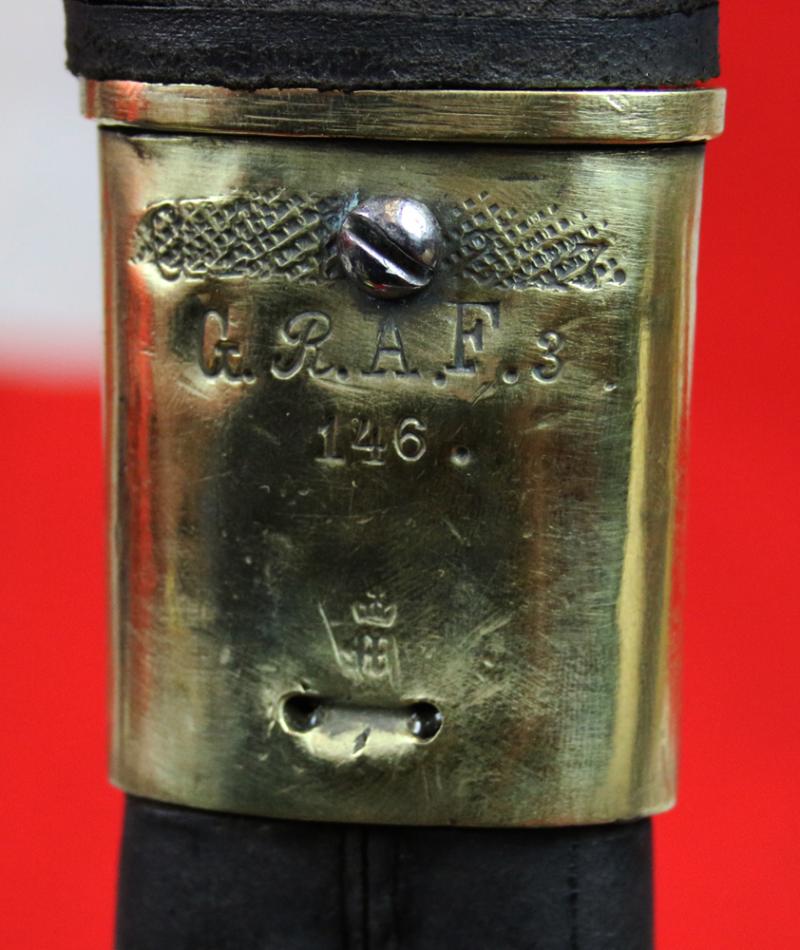
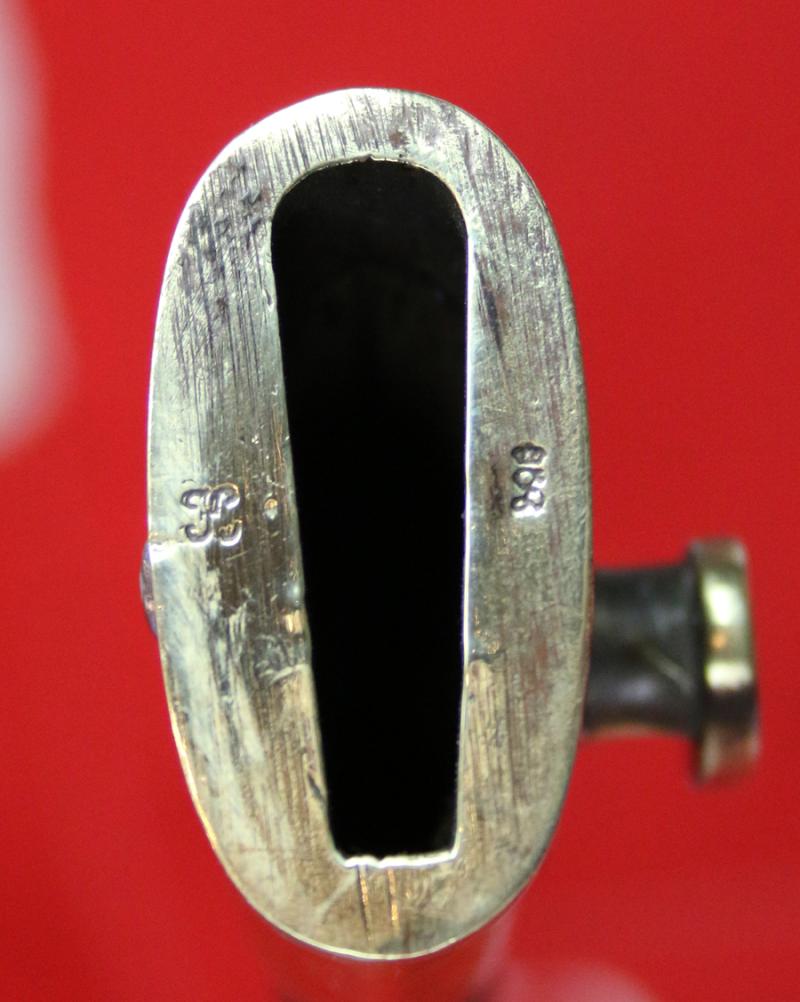
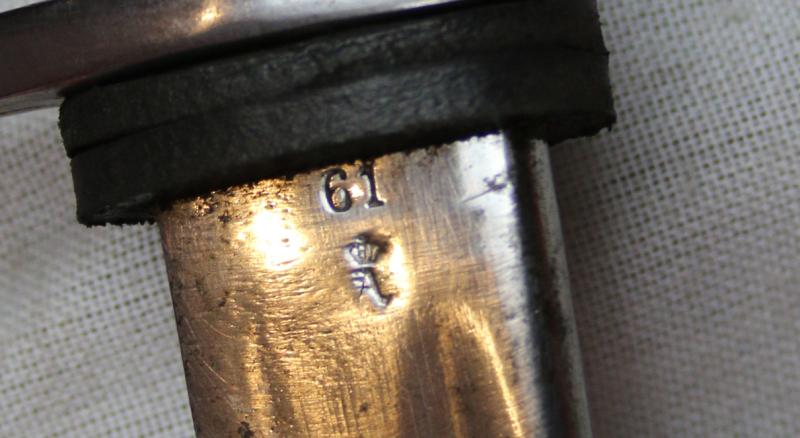
In fabulous condition, regimentally marked and German inspection proofed throughout its service life, from 1860 up to 1918. a rare beauty made even rarer still due to its condition. The blade ricasso is first issue date stamped, {61} for 1861 with Prussian inspection stamp. The regimental stamping on the scabbard throat mount is for a WW1 Guards Fusilier regiment, with regiment numbering 3, and sword-bayonet number 146, and above them, the deleted previous 1860’s stampings for its service in the Guard Fusiliers Regt. 2? {now difficult to decipher} in the Franco Prussian War from 1869. The hilt pommel is WW1 inspection stamped. The brass scabbard throat opening is further marked with Franco Prussian War inspection stamps
The Prussian M1860-98 designation refers to the extended service use life of the Model 1860 Fusilier Sword Bayonet, which was originally issued for the Dreyse needle-fire rifle, and later updated through successive rifle eras up to 1898 and World War I.
Initial Adoption and authorized on August 4, 1860, the M1860 sword bayonet was custom-built for the new Dreyse Zündnadel-Füsiliergewehr (Model 1860 Fusilier Needle-Fire Rifle).
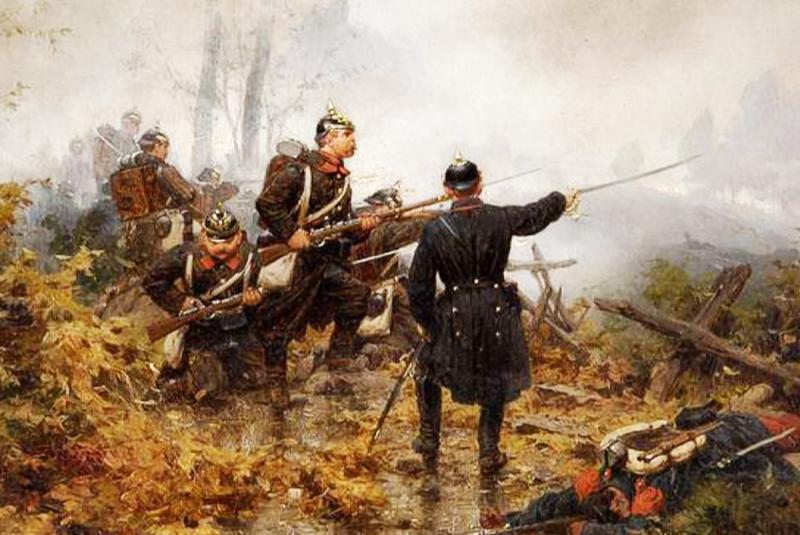
During the Franco-Prussian War (1870–1871), the Guards Fusilier Regiment (Garde-Füsilier-Regiment) served as an elite light infantry unit within the Prussian Guards Corps, participating in major campaigns including the battles of Gravelotte and Sedan, as well as the Siege of Paris.
At the Battle of Gravelotte (August 18, 1870): Fusiliers fought fiercely in one of the bloodiest engagements of the war, helping secure a strategic victory against the French.
At the Battle of Sedan (September 1, 1870): They Participated in the encirclement and decisive defeat of the French Imperial Army.
In the Siege of Paris (1870–1871): They Maintained operational lines and containment during the prolonged investment of the French capital.
Their service In WW1
The Guards Fusilier Regiment (Garde-Füsilier-Regiment) and reserve, were an elite infantry unit of the Prussian Army's Guard Corps (Gardekorps), garrisoned in Berlin.
During World War I, it fought as a premier frontline formation on both the Western and Eastern Fronts, suffering heavy casualties as part of the German Imperial elite forces.
1914 (Western & Eastern Fronts): They Fought in the initial invasion of France and Belgium (including the Battle of the Marne), then shifted east to counter Russian offensives (including operations in Poland and East Prussia).
1915–1917: Engaged in intense trench warfare and major defensive/offensive battles on the Western Front, including the Somme and operations in Flanders.
1918: Participated in the German Spring Offensive (Kaiserschlacht) before facing the final Allied Hundred Days Offensive.
It originally featured a distinctive cast-brass hilt with a T-shaped slot, a leaf-spring locking button, a steel crossguard with an "S"-shaped quillon, and a 21mm muzzle ring.
It uses a powerful and robust, roughly 500mm "quill-back" or pipe-backed blade designed to double as both a sidearm and a heavy cutting tool for light elite infantry.
Conversions and the Model 1898 Transition
Mauser 1871 Adaptations: Following the introduction of the single-shot Mauser Model 1871 rifle, surplus M1860 fusilier blades and modified variants were reissued, often resized or repurposed for foot artillery units (Artillerie-Seitengewehr) by altering muzzle ring dimensions.
The 1898 upgrades as the German military transitioned to the bolt-action Gewehr 98 (Model 1898) rifle, older high-quality blades like the M1860 and M1871 were recycled.
By 1913 (culminating in configurations like the 71/98 and related patterns), armourers mated these trusted, long fusilier blades onto modern {at the time} 98-style handles and pommels.
These hybrids allowed artillery, and reserve troops (Landwehr/Landsturm) to maintain effective sidearms well into the First World War.
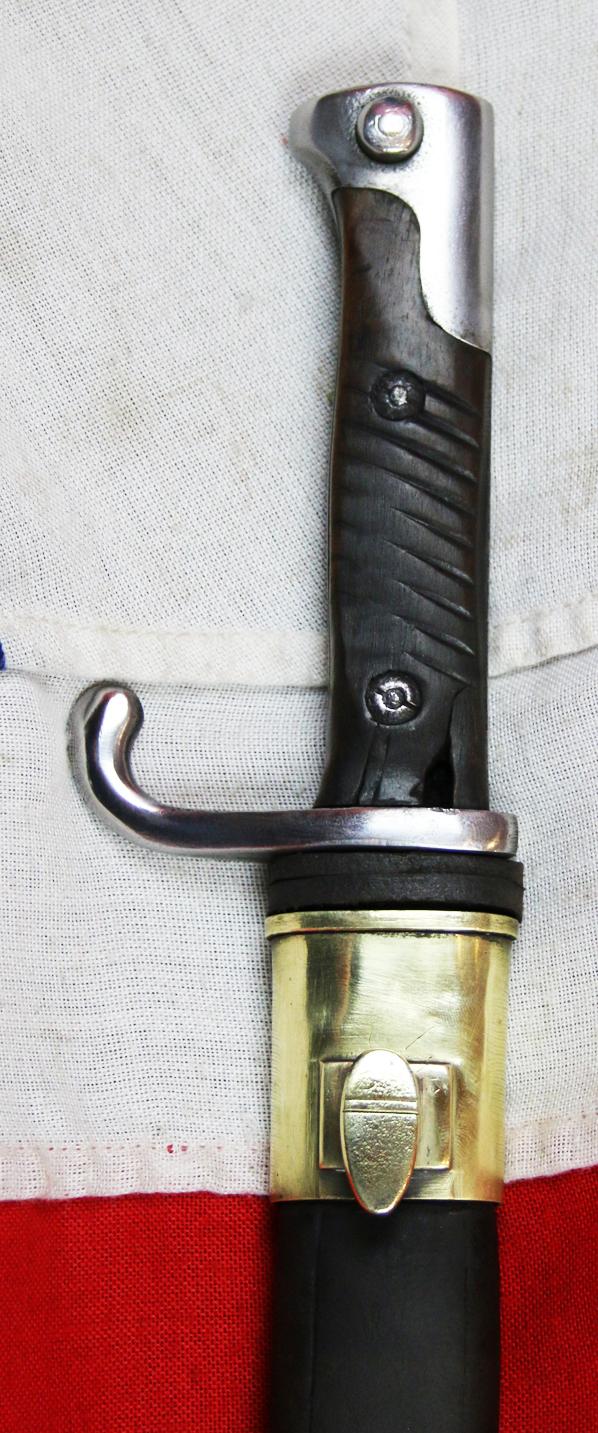
The blade is near mint, the scabbard also near mint, the hilt is excellent, with the ventilation oiling holes, at the bottom of each wooden grip side, now no longer round but slightly misshapen with light cracking {but still perfectly sound} due to age and service use.
Code: 26336
625.00 GBP