
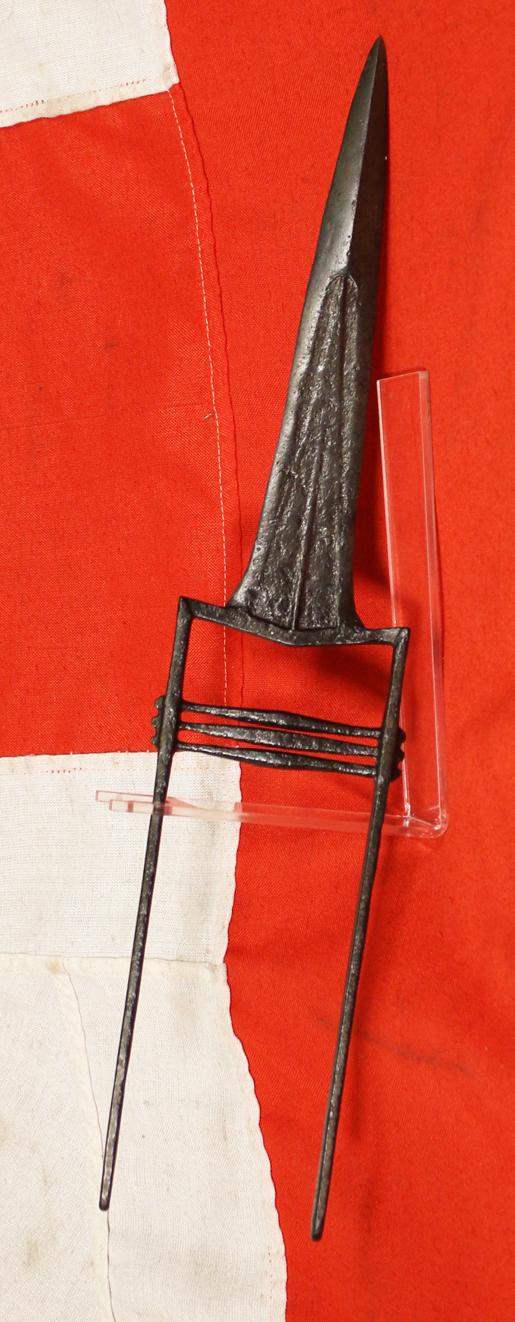
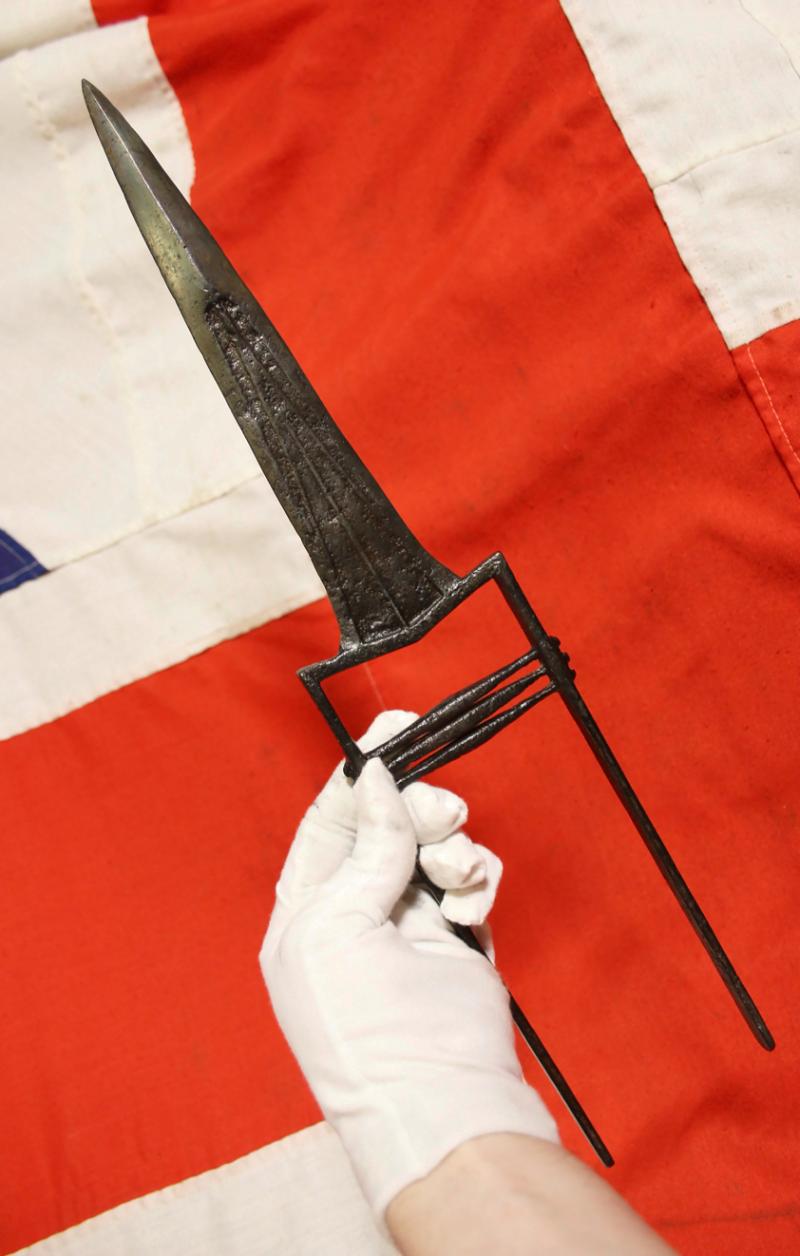
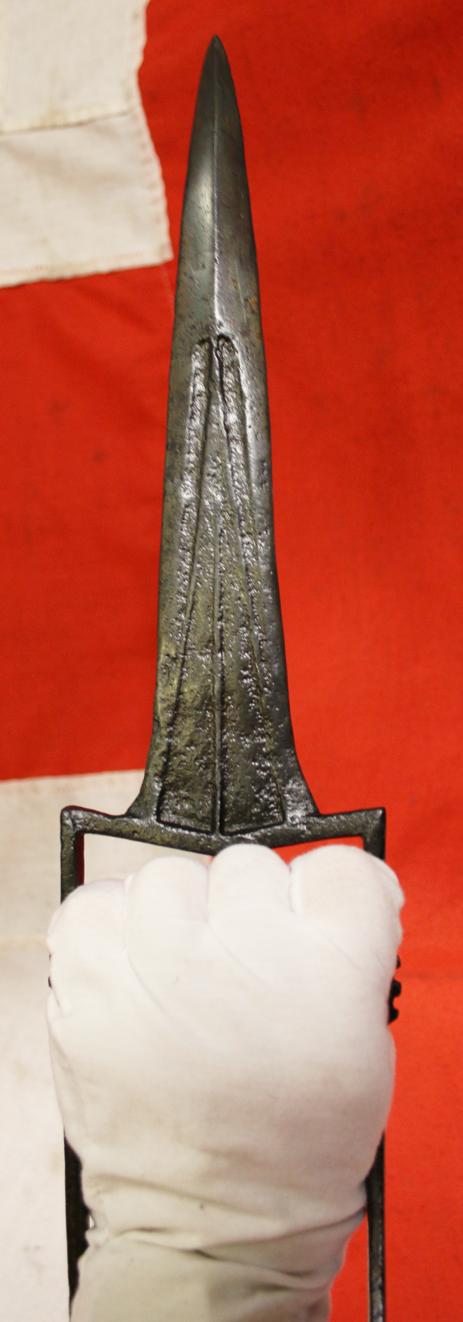
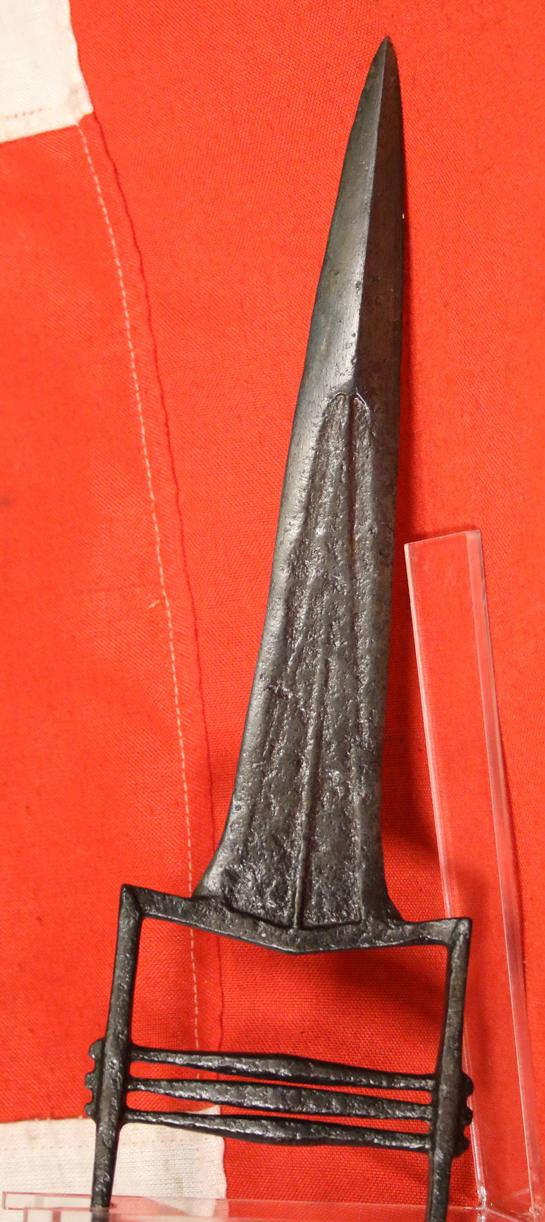
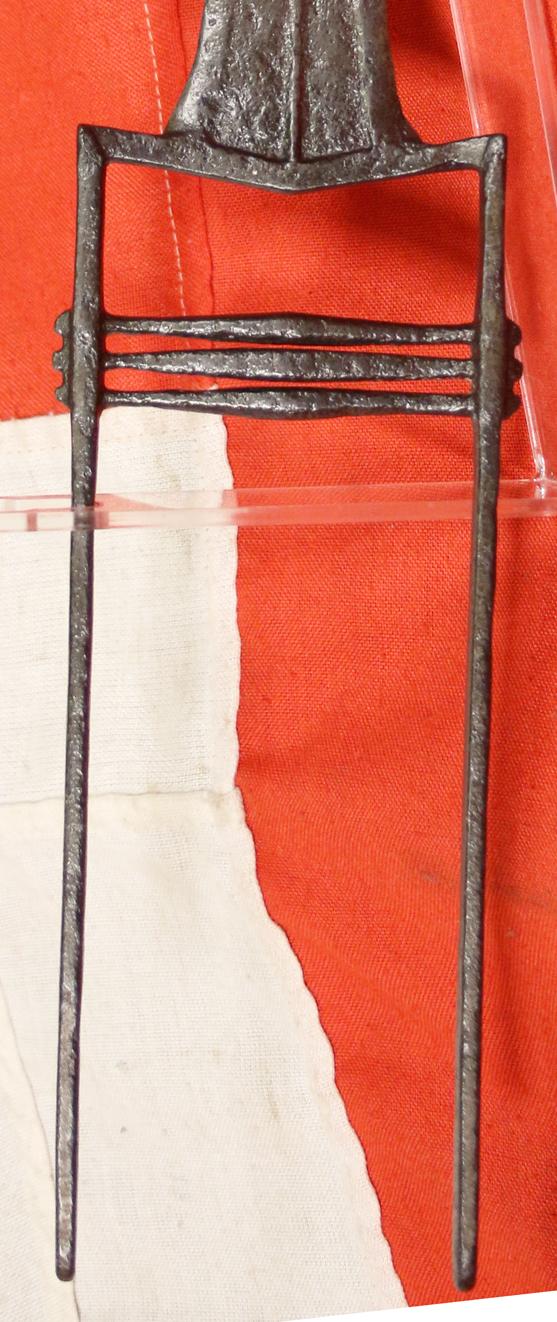
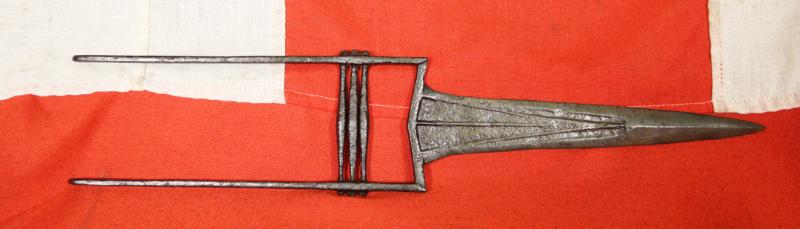
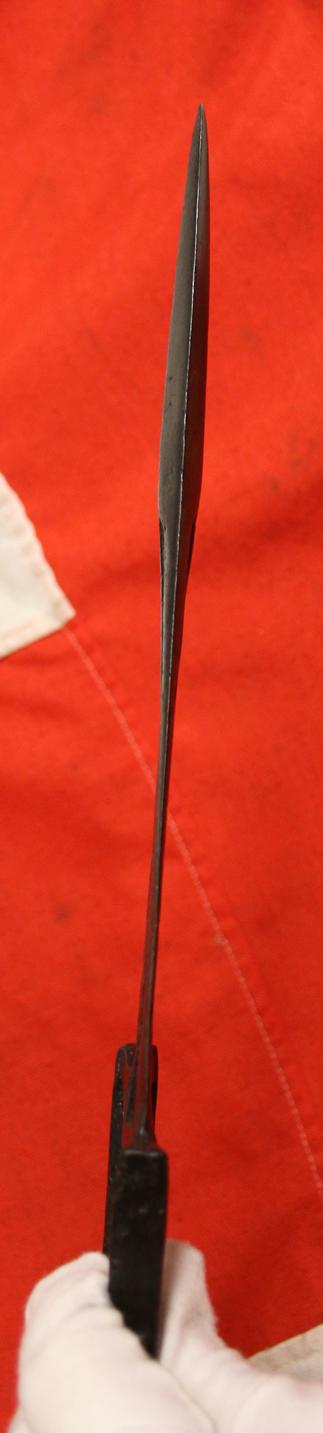
An Early, Historical and Fine, Original, Moghul Empire Katar. As With Most Of The Fine, Surviving, Early Katar It Has an Armour Piercing Blade. Made and Used From the Time Of Moghul Emperor Shah Jahan in the 17th Century
Indian long blade armour piercing katar from the era of Shah Jahan, builder of The Taj Mahal, the most famous monument to a beloved wife in the world.
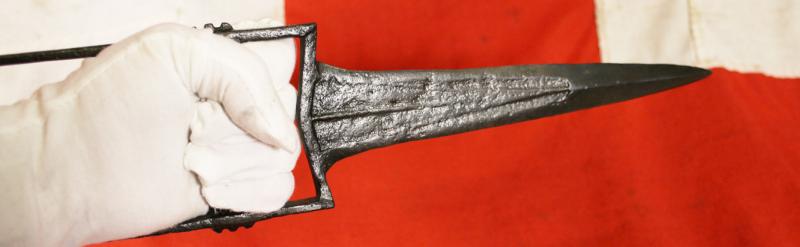
It was well known for its armour piercing capabilities, as many historical katars featured a blade that dramatically thickened into a diamond-shaped tip {see photo 9 in the gallery of this katar's blade tip}. This was intentionally engineered to punch directly through steel chainmail or split shields during an ambush.
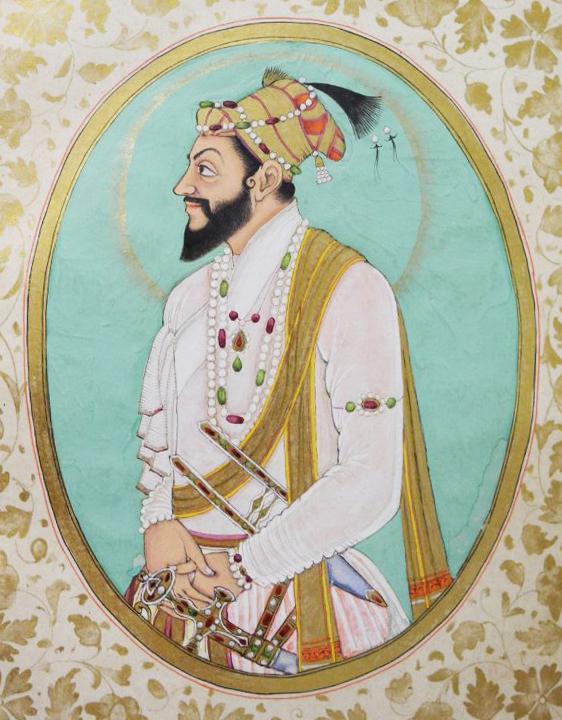
The Katar is one of India's oldest weapons, characterised by its H shape grip and triangular blade. The Katar was predominantly used in battle and by skilled assassins as a thrusting dagger due to its design similar to the boxing method the user would punch with the dagger in the hand with the aim of piercing chain mail and the opponent. Due to the build of the Katar, with its H shaped grip, the Katar also provided a great defence as the handle bars protected the wrist from getting cut. Katars could also be paired with other weapons, such as a Kard or Pesh Kabz and utilised for slashing; as many of them hard sharp edges. From becoming a predominantly functional weapon, during the Mughal reign of India (from the 1500s onwards) rulers would wear a highly bejewelled gold covered example {see the portrait in the gallery}
The portrait in the gallery, circa 1650, is of Moghul Shah Shuja who was the second son of the Mughal Emperor Shah Jahan and Empress Mumtaz Mahal. He is wearing his similar form katar. Although his katar was naturally decorated with fabulous jewels, ours is plain steel.
He was the governor of Bengal and Odissa and had his capital at Dhaka, presently Bangladesh. He suffered and ignominious fate at the hands of his brother, Aurangzeb, who declared himself the next Emperor. In the Moghul Empire it was entirely normal for the most powerful son of the previous Shah to kill, banish or imprison their brothers, who would or even might be contenders for the throne. It was similarly the normal practise of the Ottomans.
Shah Jahan is best remembered for his architectural achievements. His reign ushered in the golden age of Mughal architecture. Shah Jahan commissioned many monuments, the best known of which is the Taj Mahal in Agra, in which is entombed his favorite wife, Mumtaz Mahal. His relationship with Mumtaz Mahal has been heavily adapted into Indian art, literature and cinema. He owned the royal treasury, and several precious stones such as the Kohinoor and has thus often been regarded as the wealthiest person in history.
The death of his father Jahangir in late 1627 spurred a war of succession between his sons Shahryar and Khurram from which Shah Jahan emerged victoriously. He executed all of his rivals for the throne and crowned himself emperor on January 1628 in Agra, under the regnal title "Shah Jahan" (which was originally given to him as a princely title). His rule saw many grand building projects, including the Red Fort and the Shah Jahan Mosque. Foreign affairs saw war with the Safavids, aggressive campaigns against the Shia Deccan Sultanates,10 conflict with the Portuguese, and positive relations with the Ottoman Empire. Domestic concerns included putting down numerous rebellions, and the devastating famine from 1630-32.
In September 1657, Shah Jahan fell seriously ill. This set off a war of succession among his four sons in which his third son, Aurangzeb, emerged victorious and usurped his father's throne. Shah Jahan recovered from his illness, but Emperor Aurangzeb put his father under house arrest in Agra Fort from July 1658 until his death in January 1666. He was laid to rest next to his wife in the Taj Mahal. His reign is known for doing away with the liberal policies initiated by Akbar. Shah Jahan was an Orthodox Muslim, and it was during his time that Islamic revivalist movements like the Naqsbandi began to shape Mughal policies.
9 1/4 inch long blade, overall 17 3/4 inches long. 3 1/2 inches wide.
Code: 26355
875.00 GBP