
Japanese

A Beautiful Samurai Edo Period Aikuchi Ko-tantō Dagger With a Fine, Unokubi (鵜首). Zukuri Blade & A Full Suite of Koshirae Of the Tokugawa, The Shoguns Of Japan For Over 250 years
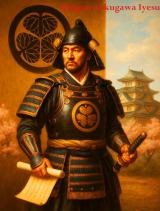
A most fine tanto sword blade {all Japanese swords even tanto, are classified as swords} in superb polish Unokubi (鵜首) Zukuri Shin Shinto Blade. In wonderful full suite of original Edo period aikuchi koshirae {fittings and mounts} that are shakudo and sinchu, and decorated throughout, with eight 'mon' {clan crest} panels of Shogun Tokugawa Iyesu. Likely the stunning aikuchi tanto of a high ranking Tokugawa retainer. All are Tokugawa mon with scrolling vines and ginger leaves and roots. There are two Tokugawa mon panels on the tsuka and six panels on the saya. The kashira and saya jiri are in the form of decorated samurai court caps.
We acquired a 'matched' pair of Tokugawa koshirae aikuchi tanto, one o-tanto this one ko-tanto, but we are offering them seperately as tanto are not worn as pairs.
The Ko-tantō, are highly lightweight daggers. Because of their compact size, they were highly favoured as concealable personal defense weapons. They were frequently carried inside the robes kimono where they were known as a kaiken or tucked away by samurai for emergency defense.
The tanto was invented partway through the Heian period. With the beginning of the Kamakura period, tanto were forged to be more aesthetically pleasing, and hira and uchi-sori tanto becoming the most popular styles. Near the middle of the Kamakura period, more tanto artisans were seen, increasing the abundance of the weapon, and the kanmuri-otoshi style became prevalent in the cities of Kyoto and Yamato. Because of the style introduced by the tachi in the late Kamakura period, tanto began to be forged longer and wider. The introduction of the Hachiman faith became visible in the carvings in the hilts around this time. The hamon (line of temper) is similar to that of the tachi, except for the absence of choji-midare, which is nioi and utsuri. Gunomi-midare and suguha are found to have taken its place.
During the era of the Northern and Southern Courts, the tanto were forged to be up to forty centimetres as opposed to the normal one shaku (about thirty centimetres) length. The blades became thinner between the uri and the omote, and wider between the ha and mune. At this point in time, two styles of hamon were prevalent: the older style, which was subtle and artistic, and the newer, more popular style. With the beginning of the Muromachi period, constant fighting caused the greater production of blades. Blades that were custom-forged still were of exceptional quality. As the end of the period neared, the average blade narrowed and the curvature shallowed
As once told to us by an esteemed regular visitor to us here in our gallery, Victor Harris, in order to study and discuss our extensive collection, and he used the same words that are repeated in his book below;
“In these textures lies an extraordinary and unique feature of the sword - the steel itself possesses an intrinsic beauty. The Japanese sword has been appreciated as an art object since its perfection some time during the tenth century AD. Fine swords have been more highly prized than lands or riches, those of superior quality being handed down from generation to generation. In fact, many well-documented swords, whose blades are signed by their makers, survive from nearly a thousand years ago. Recognizable features of the blades of hundreds of schools of sword-making have been punctiliously recorded, and the study of the sword is a guide to the flow of Japanese history.”
Victor Harris
Curator, Assistant Keeper and then Keeper (1998-2003) of the Department of Japanese Antiquities at the British Museum. He studied from 1968-71 under Sato Kenzan, Tokyo National Museum and Society for the Preservation of Japanese Swords
One of the greatest joys of sword collecting is the opportunity to learn about the history and culture of different civilisations. Swords have been used by warriors for millennia, and each culture has developed its own unique sword designs and traditions. By studying swords, collectors can gain a deeper understanding of the people who made and used them.
Another joy of sword collecting is the sheer variety of swords that are available. There are swords in our gallery from all over the world and from every period of history. Collectors can choose to specialize in a particular type of sword, such as Japanese katanas or medieval longswords, or they can collect a variety of swords from different cultures and time periods. No matter what your reasons for collecting swords, it is a hobby that can provide many years of enjoyment. Swords are beautiful, fascinating, and historically significant objects.
Collecting antique swords, arms and armour is not merely an acquisition of objects; it’s an engagement with the historical and cultural significance that these pieces embody. As collectors, we become custodians of history, preserving these heritage symbols for future generations to study and appreciate.
We are now, likely the oldest, and still thriving, arms armour and militaria stores in the UK, Europe and probably the rest of the world too. We know of no other store of our kind that is still operating under the control its fourth successive generation of family traders
We are very privileged to be the UK’s premier original military antiques gallery and website, and to be able to consistently, continually, and regularly, offer the finest original collectors items in our shop for over 100 years
Blade inches long read more
2150.00 GBP

A Beautiful Samurai Aikuchi Ō-tantō Dagger With a Fine Early Shinto Blade Circa 1600 & A Full Suite of Koshirae Of the Tokugawa. The Shoguns Of Japan
A most fine tanto sword blade {all Japanese swords even tanto, are classified as swords} in superb polish showing an elegant suguha hamon. In wonderful full suite of original Edo aikuchi koshirae {fittings and mounts} are shakudo and sinchu, and decorated throughout with fourteen 'mon' {clan crest} panels of Shogun Tokugawa Iyesu. Likely the stunning aikuchi tanto of a high ranking Tokugawa retainer. All are Tokugawa mon with scrolling vines and ginger leaves and roots. There are four Tokugawa mon panels on the tsuka and ten panels on the saya. The kashira and saya jiri are in the form of decorated samurai court caps.
In Japanese terminology, the prefix Ō- (大) means "large" or "great," while Ko- (小) means "small" or "short". A standard traditional Japanese tantō (dagger) generally has a blade length (known as nagasa) of under 1 shaku, which is approximately 30.3 cm (11.9 inches). This one being the Ō-tantō has a 12 inch blade
We acquired a 'matched' pair of Tokugawa koshirae aikuchi tanto, this one is an Ō-tantō, the other is a Ko-tantō, but we are offering them seperately as tantō are not usually worn paired like the daisho.
The larger Ko-tantō may be worn in the obi, the smaller Ō-tantō concealed withing the robes of the samurai.
The tanto was invented partway through the Heian period. With the beginning of the Kamakura period, tanto were forged to be more aesthetically pleasing, and hira and uchi-sori tanto becoming the most popular styles. Near the middle of the Kamakura period, more tanto artisans were seen, increasing the abundance of the weapon, and the kanmuri-otoshi style became prevalent in the cities of Kyoto and Yamato. Because of the style introduced by the tachi in the late Kamakura period, tanto began to be forged longer and wider. The introduction of the Hachiman faith became visible in the carvings in the hilts around this time. The hamon (line of temper) is similar to that of the tachi, except for the absence of choji-midare, which is nioi and utsuri. Gunomi-midare and suguha are found to have taken its place.
During the era of the Northern and Southern Courts, the tanto were forged to be up to forty centimetres as opposed to the normal one shaku (about thirty centimetres) length. The blades became thinner between the uri and the omote, and wider between the ha and mune. At this point in time, two styles of hamon were prevalent: the older style, which was subtle and artistic, and the newer, more popular style. With the beginning of the Muromachi period, constant fighting caused the greater production of blades. Blades that were custom-forged still were of exceptional quality. As the end of the period neared, the average blade narrowed and the curvature shallowed
As once told to us by an esteemed regular visitor to us here in our gallery, Victor Harris, in order to study and discuss our extensive collection, and he used the same words that are repeated in his book below;
“In these textures lies an extraordinary and unique feature of the sword - the steel itself possesses an intrinsic beauty. The Japanese sword has been appreciated as an art object since its perfection some time during the tenth century AD. Fine swords have been more highly prized than lands or riches, those of superior quality being handed down from generation to generation. In fact, many well-documented swords, whose blades are signed by their makers, survive from nearly a thousand years ago. Recognizable features of the blades of hundreds of schools of sword-making have been punctiliously recorded, and the study of the sword is a guide to the flow of Japanese history.”
Victor Harris
Curator, Assistant Keeper and then Keeper (1998-2003) of the Department of Japanese Antiquities at the British Museum. He studied from 1968-71 under Sato Kenzan, Tokyo National Museum and Society for the Preservation of Japanese Swords
One of the greatest joys of sword collecting is the opportunity to learn about the history and culture of different civilisations. Swords have been used by warriors for millennia, and each culture has developed its own unique sword designs and traditions. By studying swords, collectors can gain a deeper understanding of the people who made and used them.
Another joy of sword collecting is the sheer variety of swords that are available. There are swords in our gallery from all over the world and from every period of history. Collectors can choose to specialize in a particular type of sword, such as Japanese katanas or medieval longswords, or they can collect a variety of swords from different cultures and time periods. No matter what your reasons for collecting swords, it is a hobby that can provide many years of enjoyment. Swords are beautiful, fascinating, and historically significant objects.
Collecting antique swords, arms and armour is not merely an acquisition of objects; it’s an engagement with the historical and cultural significance that these pieces embody. As collectors, we become custodians of history, preserving these heritage symbols for future generations to study and appreciate.
We are now, likely the oldest, and still thriving, arms armour and militaria stores in the UK, Europe and probably the rest of the world too. We know of no other store of our kind that is still operating under the control its fourth successive generation of family traders
We are very privileged to be the UK’s premier original military antiques gallery and website, and to be able to consistently, continually, and regularly, offer the finest original collectors items in our shop for over 100 years
Blade 12 inches long read more
4450.00 GBP

A Fine & Fabulous, Koto To Shinto Period, Rare, Original Antique Japanese Shikomi-zue 仕込み杖, "Prepared Cane". A Traditional, ‘Hidden Sword Stick’, 400 to 500 Years Old. With a Sakura Branch Trompe-l'œil Concealment
This is one of the nicest and most beautiful of it's type we have seen, with a beautiful chisa katana blade, up to around 400 to 500 years old, with its gilt habaki blade collar. A fine, smith made, traditional samurai blade, of super quality, in good polish for age {at present preservative lacquer coated, but being removed}.
Very finely carved Edo period wooden saya and tsuka, disguise decorated, with ishime urushi stone finished lacquer, in order to 'deceive the eye' {Trompe-l'œil} and to imitate a black bark sakura tree branch walking stick.
The early blade is superb, but at present covered in antique Victorian preservative clear lacquer, we are having it professionally artisan removed, in order to reveal the stunning polish of the blade, that is easy to see but impossible to photograph suitably at present, which we will then photograph and show here in the gallery next week once it is completely conserved. Overall this rare piece is in superb condition for age.
In the 1870's the Meiji Emperor disbanded the fuedal samurai order and banned the wearing of the sword. This created much unrest between the samurai and the government and some samurai moved to carrying 'shikome-zue' the hidden sword.
Therefore, via a circuitous route of deception, they still remain armed, but, with their katana concealed and hidden from public view. But by that deception they felt, least in part, their honour remained intact. With their most elegant and finest bespoke blade upon their person.
In ninjutsu shikomizue became quite popular, as it provided the night warriors with what they needed most – versatility, secrecy and mortality.
The walking stick was popular among all the classes of japanese society and carrying it caused no suspicion at all. Combined with the impersonation skills, shikomizue was really a dangerous and most advabntagouly concealed weapon, enabling attack of ones enemy or even assassin, most suddenly and with deadly skill.
This is possibly one of the nicest of it's types we have ever seen. The blade is typical chisa katana with elegant curvature. Very nice hamon in very nice polish {once cleaned}. The stick is fully and superbly hand carved and over lacquered in urushi to simulate an anonymous prunus tree branch walking stick.
This piece was absolutely the sword of choice of the world reknown, fictional, blind samurai, Zatoichi.
He does not carry a traditional katana, instead using a very well traditionally made shikomi-zue (cane sword) within a sakura branch Trompe-l'œil concealment, exactly as this sword is mounted.
Zatoichi's cane sword shikome-zue, was forged by a famous master bladesmith, and is of superior quality, just like this rare, fine and beautiful traditional ancient chisa katana bladed example.
A conversation piece par excellance
We show in the gallery a modern Japanese painting of Zatoichi, old poster of the blind swordsman movie, and an 1817 Japanese print by Hokusai of his depiction of an all black clad warrior, a so called ninja, climbing a rope, with what appears to be his identical mounted black shikome-zue hidden sword stick. For historical context purposes. read more
4250.00 GBP

A Very Attractive Late Koto To Early Shinto Period Wakazashi With All Its Original Shinto Edo Period Koshirae. Untouched For 150 Years Since Its Gifted Presentation in Japan 1870
Around 440 years old. A most powerful and substantial blade, with considerable presence, and mounted with a two part copper habaki blade collar, and it is bearing a beautiful hamon with deep suguha hamon. The iron fuchi kashira are Higo school decorated with sporadic droplets of silver. the tsukaiti od lacquered leather over a single menuki of pure gold onlaid shakudo flower stems, on early samegawa giant rayskin. The iron mokko gata tsuba is signed and decorated with mountain and river scene with a villlage in the forground.
The original urushi lacquer saya is in a bright and matt in contrasting design, with two small inserted rectangular wood panels of black urushi decorated with gold lacquer maki-e of buddhist bonji, and it is mounted with iron fittings, with a buffalo horn kurigata.
The Edo period original lacquer work saya has some small and medium natural age edge marks and losses read more
3450.00 GBP

A Most Impressive & Beautiful Bladed Antique Shinto Period, Edo Era Samurai Horseman's Katana. All Original edo Period Koshirae & Kanieye School Iron Mokko Gata Tsuba
A simply amazing sword, of the early Shinto period 1600's, with a blade of beauty, and all original Edo period fittings, of an iron kabutogane kashira, Higo school and an iron fuchi Higo school, signed Mejin Shodai, Kanieye school tsuba. Golden silk tsukaito wrapped over a pair of gold and silver menuki of leaves and berries, on samegawa giant rayskin.
This is a katana made for a upper ranking samurai based on horseback in combat, certainly a cursive katana, and a battle sword, made to complete an uncomprimising task of close combat and aggressive swordmanship.
Designed as much for cleaving armour and helmets in two, as much as defeating another samurai on horseback. Although samurai would not, one would say, be a cavalry based warrior, all senior samurai would be mounted and thus travel on horseback, and some cavalry type samurai could be deployed in battle, but with differing combat styles depending on what part of Japan they came from. The cavalry troops, being Samurai, had personal retainers that stayed closer to them in the Sonae, carried their weaponry and worked as support units, much like an European squire. They also joined the fight whenever possible (especially in the mounted infantry scenario) and were often responsible of taking heads for their lords.
These foot Samurai were also used as heavy infantry or archers to support the ashigaru lines.
Tactics
Given the fact that the Samurai could directly dismount and operate as infantry, there were some specific tactics for horsemen.
Cavalry in general was only used after the battle was already started, either to deliver a decisive victory or to trying to save the day.
Norikiri
This is a classic charge, where several small groups of five to ten horseman ride consequently (possibly with a wedge formation) into a small area against the enemy lines, to maximize the shock. It was mainly used by heavy cavalry in the East, but given the fact that the ideal target where "weavering" units with low morale or disorganized, even medium cavalry could perform this charge.
The main role of this charge was to create confusion; if it didn't succeed, the cavalry regroups and either retreat or deliver another charge.
Norikuzushi
This is a combined infantry and cavalry charge. The horseman charged first, and after creating mayhem, a second charge is delivered by infantries armed with polearms, which could keep on fighting. The main target for this tactics were ranged units detached by the army. After a Norikuzushi usually follows a Norikiri by the cavalry group. 28 inch blade tsuba to tip.
Every single item from The Lanes Armoury is accompanied by our unique Certificate of Authenticity. Part of our continued dedication to maintain the standards forged by us over the past 100 years of our family’s trading, as Britain’s oldest established, and favourite, armoury and gallery read more
6250.00 GBP

A Very Fine Koto Samurai 500 Year Old Sword With Rare 'Rabbit Ears' Choji Hamon and Sukashi Tsuba Designed for The 月の兎, Tsuki no Usagi, The Japanese Moon Rabbit, Written in the Konjaku Monogatarishū, 1000 Poems Written in the Heian Period, 794-1185
A stunning Koto period sword, of museum quality created around 1550 around 500 years ago, with all its original Edo period koshirae. The blade has an intense and dramatic deep choji hamon that occupies over one third of the blade, and half way down the blade from the kissaki, emerging from the amazing and remarkable deep choji design, is the Moon Rabbit, with its long and pronounced ears, conversing with its companion, the fox, with its bushy tail. Within the incredibly vibrant and complex hamon, it is possible, is concealed their other companion, the monkey.
Red and black speckled urushi lacquer saya, black silk tsukaito wrap over gilt and bronze Samurai menuki, and a wondrous early Edo iron mokko sukashi tsuba depicting the Moon Rabbit gold shakudo koshirae with relief flowers.
Elegant deep sweeping Sori with good Funbari.
The Edo sukashi tsuba depicts the fully pierced design, within the large iron tsuba, of Tsuki no Usagi, the moon rabbit, beneath a gold full moon
The Japanese moon rabbit (月の兎, Tsuki no Usagi)
Early samurai warriors revered the moon rabbit (known as Tsuki no Usagi or Gyokuto) because it perfectly embodied the most sacred virtues of their strict warrior code, Bushido, alongside vital tactical attributes for the battlefield. Far from being just a cute folklore character, the rabbit was a potent, formidable symbol of ultimate self-sacrifice, speed, agility, and forward-moving determination
To the samurai, this narrative was the ultimate expression of loyalty and selflessness. A warrior was expected to lay down his life for his lord (daimyo) and his honour at a moment's notice without hesitation. The rabbit represented a fearless embrace of death for a higher duty.
Biologically, rabbits are known for jumping and running forward, finding it difficult to move backward easily. This physical trait was translated by the warrior class into a martial philosophy of relentless forward momentum. Just like the dragonfly (another popular samurai motif), the rabbit symbolized a warrior who never retreats on the battlefield. The moon was a symbol of clarity, enlightenment, and divine protection. By wearing a moon rabbit themed sword or a kabuto helmet with a moon rabbit crest, a samurai was channeling the mystical, shifting power of both the moon and the sea to overwhelm their enemies
The earliest known version of the story in Japan appeared in the Konjaku Monogatarishū, a collection of 1,000+ poems written late into the Heian period (794–1185). Since then, stories of the moon rabbit have graced Japanese folklore and Buddhist mythology.
The myth of the rabbit in the moon is very ancient. The earliest written version comes from the Jātaka tales, a 4th century BCE collection of Buddhist legends written in Sanskrit. The legend was brought along with Buddhism from India to China, where it was blended with local folklore. It came to Japan in the 7th century CE from China, where it was again adapted and adjusted to fit local folklore.
The Japanese word for pounding mochi in a mortar like the rabbit is doing—餅搗き (mochitsuki)—and the word for the full moon—望月 (mochitsuki)—are homophones.
Legends: The Japanese version of the Sanskrit tale appears in Konjaku monogatarishū. A fox, a monkey, and a rabbit were traveling in the mountains when they came across a shabby-looking old man lying along the road. The old man had collapsed from exhaustion while trying to cross the mountains. The three animals felt compassion for the old man, and tried to save him. The monkey gathered fruit and nuts from the trees, the fox gathered fish from the river, and they fed the old man. As hard as he tried, the rabbit, however, could not gather anything of value to give to the old man. Lamenting his uselessness, the rabbit asked the fox and monkey for help in building a fire. When the fire was built, the rabbit leaped into the flames so that his own body could be cooked and eaten by the old man. When the old man saw the rabbit’s act of compassion, he revealed his true form as Taishakuten, one of the lords of Heaven. Taishakuten lifted up the rabbit and placed it the moon, in order that all future generations could be inspired by the rabbit’s compassionate act. The reason it is sometimes difficult to see the rabbit in the moon is because of the smoke which still billows from the rabbits body, masking his form somewhat.
Overall the sword is in super condition, and the hamon is noticably spectacular with thin natural aged lamination lines in areas. The tsukaito is excellent, the tsuba faultless and the fuchi is in shakudo with pure overlaid gold flower heads, also in superb condition, the kashira bears a round clan mon, possibly with a bird within, but now difficult to interpret due to age.
We recall a most interesting nihonto chat we had between us, and two old chums of ours, Victor Harris {curator of Japanese Arms at the British Museum} and Christopher Fox our Japanese edged weapon consultant of over 25 years. It was concerning the types of elaborate hamon and the conversation turned to the detail of art designs within blade hamon such as the very rarely seen Mount Fuji. However , it culminated, with both their agreement, that it was the ‘rabbit ears’ that was likely the rarest of all patterns, that Victor remarked, is a type of intriguing design the average collector may never actually see or even recognise in a lifetime of collecting. And, the skill that must have been required to create stylised forms of animals, yet in such a small part of an elaborate design, that they may never actually be recognised unless searched for. It reminds one of the English furniture maker, aka ‘mouse man’, and he created a tiny carved mouse within the design of every piece of furniture he made. read more
7950.00 GBP

Superb Early to Mid Edo, Museum Quality Samurai War Helmet Kabuto, by Nobutada. 21 'Helmet Skull Bowl Plates', With Carved Wood & Gold 月の兎, Tsuki no Usagi Moon Rabbit Maedate & Clan Mon of the Sakai Clan, & “Fierce Face” Ressai, Face Armour
A truly fabulous, original, signed Edo samurai's antique kabuto, war helmet, worthy of a museum display, the best samurai or Japanese art collections, or as a single 'statement' piece for any home.
This is, without doubt, one of the most beautiful and fine original antique samurai war helmets, kabuto, we have seen for a jolly long time. Helmets of such beauty and quality as this can be prized and valued as much as a complete original samurai armour.
The imposing beauty of the helmet is entrancing, and the menpo {the moustached, grimacing expression face armour} sets it off superbly with a most intimidating presence. When this was worn by its fierce-some armoured samurai he must have looked spectacularly impressive.
A 21 plate goshozan sujibachi kabuto, with ressei {fierce face } mempo face armour.
Probably a 17th-18th century, 21 ken plate, Sujibachi, which is a multiple-plate type of Japanese helmet skull bowl with raised ridges or ribs showing where the 21 tate hagi-no-ita (helmet plates) come together creating the main skull bowl bachi, and culminating at the multi stage tehen kanamono finial, with the fukurin metal edges on each of the standing plates.
The mabisashi peak is lacquered and it has a four-tier lacquered iron hineno-jikoro neck-guard laced with gold, and the skull is surmounted by a gilt-lacquered wood leaping animal, the maedate (forecrest), depicts the 月の兎, Tsuki no Usagi Moon Rabbit, the Fukigaeshi small front wings shows the mon crest symbol of a plain form katabami mon {the wood sorrel flower}.
The story and representations of the Japanese moon rabbit (月の兎, Tsuki no Usagi)
Early samurai warriors revered the moon rabbit (known as Tsuki no Usagi or Gyokuto) because it perfectly embodied the most sacred virtues of their strict warrior code, Bushido, alongside vital tactical attributes for the battlefield. Far from being just a cute folklore character, the rabbit was a potent, formidable symbol of ultimate self-sacrifice, speed, agility, and forward-moving determination
To the samurai, this narrative was the ultimate expression of loyalty and selflessness. A warrior was expected to lay down his life for his lord (daimyo) and his honour at a moment's notice without hesitation. The rabbit represented a fearless embrace of death for a higher duty.
Biologically, rabbits are known for jumping and running forward, finding it difficult to move backward easily. This physical trait was translated by the warrior class into a martial philosophy of relentless forward momentum. Just like the dragonfly (another popular samurai motif), the rabbit symbolized a warrior who never retreats on the battlefield. The moon was a symbol of clarity, enlightenment, and divine protection. By wearing a moon rabbit themed sword or a kabuto helmet with a moon rabbit crest, a samurai was channeling the mystical, shifting power of both the moon and the sea to overwhelm their enemies
It's one of popular kamon that is a design of the flower of oxalis corniculata.
The founder of the clan that chose this flower as their mon had wished that their descendants would flourish well. Because oxalis corniculata is renown, and fertile plant.
the mon form as used by clans such as the Sakai, including daimyo lord Sakai Tadayo
One of the great Sakai clan lords was Sakai Tadayo (酒井 忠世, July 14, 1572 – April 24, 1636). He was a Japanese daimyō of the Sengoku period, and high-ranking government advisor, holding the title of Rōjū, and later Tairō. You can see his image in the gallery wearing the very same form of war helmet kabuto.
The son of Sakai Shigetada, Tadayo was born in Nishio, Mikawa Province; his childhood name was Manchiyo. He became a trusted elder (rōjū) in Toyotomi Hideyoshi's government, alongside Tokugawa Ieyasu. Under Hideyoshi, he was made lord of Kawagoe Castle (in Musashi Province, today Saitama Prefecture) and later of Nagoya Castle in Kyūshū's Hizen Province. In 1600, in the lead-up to the decisive Sekigahara campaign, he fought against the Tokugawa at Aizu, and submitted to them at the siege of Ueda. Thus, having joined the Tokugawa prior to the battle of Sekigahara itself, Sakai was made a fudai daimyō, and counted among the Tokugawa's more trusted retainers. He served under Ieyasu for a time, and under the second shōgun, Tokugawa Hidetada, as a hatamoto.
The lacquered iron menpo (face mask) with four-lame yodarekake face armour. The kabuto is signed on the interior Nobutada saku Nobutada made this
After the introduction of firearms, smoke blanketed many battlefields, causing confusion for the troops. So they could be more readily identified, samurai began to wear helmets with elaborate ornaments at the front, back, or sides, often featuring an intricate crest (maedate).
In their quest for unique and meaningful armour, samurai turned to nature, folklore, or religion for inspiration. Whatever the source, they selected designs for their armor that would set them apart and communicate their personality and beliefs, whether whimsical, frightening, or spiritual.
An antique woodblock print in the gallery, likely of Sakai Tadayo, showing his same form of war helmet kabuto, decorated with his same Sakai clan mon of the katabami, and he also has a leaping animal, gold covered carved wood, as his maedate helmet crest as has ours. And he has the same 'fierce face' mempo face armour with the very same style of elaborate, pronounced moustache.
The Fukigaeshi on the left facing side of the helmet shows the mon crest symbol of a plain katabami mon but small surface lacquer area partly missing. There are very small age nicks to the helmet lacquer. It has its original helmet lining but most removed back to reveal the signature.
The story of the Moon Rabbit
The Japanese tale appears in Konjaku monogatarishū. A fox, a monkey, and a rabbit were traveling in the mountains when they came across a shabby-looking old man lying along the road. The old man had collapsed from exhaustion while trying to cross the mountains. The three animals felt compassion for the old man, and tried to save him. The monkey gathered fruit and nuts from the trees, the fox gathered fish from the river, and they fed the old man. As hard as he tried, the rabbit, however, could not gather anything of value to give to the old man. Lamenting his uselessness, the rabbit asked the fox and monkey for help in building a fire. When the fire was built, the rabbit leaped into the flames so that his own body could be cooked and eaten by the old man. When the old man saw the rabbit’s act of compassion, he revealed his true form as Taishakuten, one of the lords of Heaven. Taishakuten lifted up the rabbit and placed it the moon, in order that all future generations could be inspired by the rabbit’s compassionate act. The reason it is sometimes difficult to see the rabbit in the moon is because of the smoke which still billows from the rabbits body, masking his form somewhat.
Every single item from The Lanes Armoury is accompanied by our unique Certificate of Authenticity. Part of our continued dedication to maintain the standards forged by us over the past 100 years of our family’s trading, as Britain’s oldest established, and favourite, armoury and gallery read more
7950.00 GBP

The Lanes Armoury Probably The Largest Online Militaria Website in the World, After Over 100 Years of Brighton Trading, &, The 25th Anniversary of Our Best Antique & Collectables Shop in Britain Award
In this very special anniversary year of 2026
Presented by MILLER'S Antiques Guide, THE BBC, HOMES & ANTIQUES MAGAZINE in 2001.
With around 2000 visitors at our shop every day the most popular question asked, is, “where in earth do you find thousands of such incredible pieces?”
Well, although the answer relatively simple, it is based around over a 100 years of our firmly established reputation. Those that wish to sell, one way or another, find us, because we have been here, located and trading in Brighton for over four generations, and thus well known around the world, and more importantly, throughout the United Kingdom, as one of the most important buyers of ancient, antique and vintage collectables, in Great Britain.
We have been acquiring treasures from history, almost exclusively, from some of the most remarkable private sources for all that time, The family partners have had their specific and utterly remarkable business experience, literally unchallenged, for over fifty years. With the privilege of meeting some of the most incredible individuals imaginable, and all with their own unique story to tell, and their desire to pass on their past heirlooms, to become others heirlooms of the future.
Five years ago we were approached by a most historically enthusiastic young person studying at Sussex University who asked if they could research through our archive to complete a 'paper' based on us as one of the oldest remaining Sussex family business's.
It resulted in some remarkable statistics, that we thought we would share with our regulars, for those that have interest. The research only included the types of items that we regularly buy, sell and export today, with general antiques, furniture, porcelain, clocks, silver and works of art excluded, as we haven't been devoted to that side of the trade since selling our antique export shipping companies in 1992. However, when came to books, it was also another near impossible task to calculate, as it would likely stretch into the hundreds of thousands, {conservatively} if not millions of volumes {actually}.
In over 100 years of shop keeping in Brighton, at the time of his research, 80 of them pre-internet, apparently, we have likely sold over 200,000 books, {vintage and antique books were, and are, our largest selling single item}, 135,000 medals & badges, over 95,000 worldwide swords, knives and bayonets, over 32,000 Japanese samurai swords {for example, around 28 years ago we bought over 150 Japanese WW2 NCO swords in one vast lot, from the grandson of a WW2 British military surplus dealer, who acquired them for scrap in 1946 from the War Dept}. We have sold and exported,, apparently over 28,500 helmets of all origins and types, 27,000 pistols and muskets of all countries, at least 2450 suits of armour, European, British or Japanese, and over 1,500 cannon, both signal and full sized. Believe it or not, apparently, according to their research and calculations, these are potentially conservative figures, and the actual figure could indeed be much higher. However, in 1939 business trailed off a bit {WW2} but old pops, William {Bill} Hawkins went to the Alan West factory on the outskirts of Brighton {due to being too old to serve in the Navy} and engineered Army Tanks for the next 6 years.
So, please enjoy our historical website, and remember, every thing you see that is priced, is available, and for sale, we try to not keep our webstore filled with past 'sold' items.
Being part of the centre of the historic Brighton Lanes, anything up 2,000 to 3,000 people, will visit us here most days {especially on Saturdays} winter and summer, rain or shine.
We issue our unique, certificate of authenticity, with every single item purchased, and in regards to our Japanese items, both weapons and fittings etc. our ability to do this is based on well over a century of experience, as probably the largest military antiques dealers in Europe. We detail within our certificates, their beauty, approximate age, style, either specific or generic history, and the details of their fittings and mounts, and their potential position, use, and status in Japanese samurai history. We will detail the translations, if known, of the kanji (names) chisselled upon the nakago of swords, under their hilt bindings, but purely for information only. Although the myth persists that all Japanese master smiths signed their swords, historically, and factually, it is likely less than 30% of samurai blades were in fact ever signed. This fact is certainly found, and confirmed by us to be the case, due to our family’s 100 plus years experience. For example, it is said one of the greatest master smiths who ever lived, the great Masamune, was, apparently, most reluctant to ever sign his swords. Although this must be relative speculation, as so very few of his swords have been recognised to still exist
Our Certificates of Authenticity are our own unique version of a lifetime guarantee, based on our expertise honed over 100 years, containing a detailed description of any item purchased from our stock. In relation to our samurai weapons, the description with be a combination of our opinion of its style, approximate age and beauty, and for our Japanese samurai swords in particular, that it is an ‘original’, samurai sword, made and used by samurai, both ancient and vintage, within Japan, over the past 700 years, up to the last samurai period in the Meiji era of 1868, as well as up to 1945, if it is a military mounted shingunto sword.
Photos 4 and 5 are part of an editorial in Art and Antiques Weekly Magazine, featuring the story so far {in 1975} of the partner’s former family antiques export company, one of the largest in the world at that time. In 1992 Mark and David retired from the mass wholesale export market and morphed their business into the becoming one of the largest dedicated ‘military antiques’ and specialist book businesses instead, both of the partners true passions. read more
Price
on
Request

A Beautiful Koto Wakazashi, In Superb Original Edo Fittings and Tsuba With a Masamune Signed Blade. The Koto Era Was From 900 to 1595. The Edo Period Was From 1603 to 1868
A delightful sword, bearing the signature Masamune, associated by legend as the finest samurai sword maker in all history.
Masamune is generally regarded as the greatest swordsmith in the history of the Japanese sword. His blades, mostly daggers (‘tanto’), were both strong and beautiful and could cut extremely efficiently. Many of the technological advances accredited to Masamune were practical ones brought about by experience gained during the invasions of Japan by the Mongols in 1274 and 1281
Currently, photo 5 in the gallery, is the Masamune blade signature in the Victoria and Albert Museum. Photo 6 is of the President Truman Masamune wakazashi. Photo 7 is the Victoria and Albert Masamune signature next to our sword's signature. Photos shown for educational purposes only, The museum Masamune's sword sgnature is somewhat similar to our blades signature.
However, we believe its fair to say our beauty is unlikely to have been made by 'the' Masamune, otherwise it would be absolutely priceless, which naturally, it isn't.
The wakazashi is beautifully presented with fine original Edo mounts and fittings, including, a delightful iron plate tsuba decorated with shallow takebori chisseling of a samurai helmet kabuto, embellished with pure gold and silver, and a samurai armour arm piece, a sode. The reverse side of the tsuba is chisselled with a samurai war bow and an arrow, also embellished with pure silver. The kashira is patinated shakudo with a gold seated samurai holding a kusari, a sickle form weapon, observing a hawk in flight. The fuchi, is also shakudo, with takebori sheaths of wheat next to a flowing river. The menuki, bound beneath gold silk tsukaito, are patinated shakudo of deep takebori in the form of bundles of flower stems, with pure gold decorated flower heads and fruits, and set upon the traditional samegawa giant rayskin.
The saya is ishime lacquer in a beautifully rich, russet colour, with polished carved black buffalo horn fittings and a kozuka pocket holding a shakudo kozuka with a deep takebori gold dragon on a nanako ground. The blade has an old, aged polish, showing a fine suguha hamon and near flawless without any trace of combat damage, with a double copper double interlocking habaki {always a nice indicative sign of quality}.
Yet, is it not a wonderful thing to say one owns a Masamune wakazashi, without any of the incredible expense and heaviest of burdens, of having to pay an insurance premium, of around £500,000 a year, for the priveledge of owning an original and real Masamune.
The complete Kyoho Meibutsu Cho (including the two addendum books) list 61 authenticated Masamune being in existence in the 1700s. Surely some unauthenticated swords by him exist/existed, but it can only be hopeful conjecture. It is now believed less than 20 of his masterworks are likely to still exist.
The USA has two (potentially). One in the Truman Library, presented to President Truman by Gen. Walter Krueger, who was in turn gifted the sword by a Japanese noble (likely to gain favour). The Truman Masamune is possibly the "Mori Masamune" wakizashi, just by looking at the dimensions and photographs. The other (if it still exists) is the legendary Honjo Masamune, which was voluntarily surrendered from a private collection to the Japanese police by a member of the Tokugawa family (who chose to give them up instead of register them). It was then handed off to US occupation forces by the Japanese police and it's whereabouts are unknown currently.
Another exists in Austria, which was gifted to Albrecht von Roretz as part of a lot of swords for working to establish modern hospitals in Japan during the late 1800s.
These are the only ‘recorded’ Masamune blades to leave Japan, and none were battlefield trophies.
The British Museum list that they have a sword signed Masamune in their collection, however it is not photographed, so it is felt it is not an original, and thus, like ours that also isnt.
Another is in the Victoria and Albert Museum, acquired in 1912, it is photographed and also bears an attribution by the Ho’nami family of sword appraisers as being by Masamune, however although it is reasonably believed by many to be ‘the’ Masamune, it may be just of the period.
At a friendly chat we had with Chris Fox and Victor Harris {of the British Museum} in our gallery some years ago, in regards to how much an original would achieve if it appeared on the open market, and importantly, was agreed throughout to be genuine, the theoretical sum of 100 million pounds plus was considered as realistic.
https://www.trumanlibrary.gov/photograph-records/64-131
https://www.militaria.co.za/nmb/topic/36521-truman-library-sword/
Victoria and Albert collection, sword accession number M.20:1 to 4-1912. Although not on display. read more
Price
on
Request

A Most Attractive Koto Wakizashi Attributed to Kanemune of Etchu, 1532 WIth Japanese Attribution Papers
Uda school blade with bo hi to both sides. Fine sugaha hamon with mokume hada. Edo period Goto school mounts in shakudo patinated copper and gold depicting carved shi shi lion dogs. Menuki of shakudo and gold dragons. Iron Edo tsuba of fan formed windows, with Amidayasuri. NTHK certificated in 2003 as attributed to Kanemune of Etchu by a previous owner. The founder of the Uda School is considered to have been Kunimitsu. He was originally from the Uda district of Yamato Province. He worked around the Bunpo Era or 1317 at the end of the Kamakura Era. All of the succeeding smiths of this school used the kanji character â"Kuni", in their signatures. At some point he moved to Etchu Province so even though the Uda School had its foundation in the Yamato tradition, it is considered to be one of the wakimono schools from this region together with such schools as he Fujishima and Chiyozuru. Together these three schools are often referred to as the kita kuni mono.
Since remaining works by Kunimitsu are non-existent, his students, Kunifusa and Kunimune, are generally thought to be the true founders of this school. Both of these smiths studied under Norishige of the Etchu Province and they were active around the Koan Era (1361). The works of these early Uda smiths followed the style of the Yamato Den particularly in the areas of sugata and hamon. We rarely have swords with papers for our swords mostly came to England in the 1870's long before 'papers' were invented, and they have never returned to Japan for inspection and papers to be issued. However, on occasion we acquire swords from latter day collectors that have had swords papered in the past 30 years or so. this is one of those. It is important to bear in mind, that due to the revered status that Japanese swords achieve for most of their working lives in Japan, that the condition they survive in can be simply remarkable. One can see just how remarkable it can be, by comparing the condition of this fine sword that was made around the same time as the early Tudor period of King Henry the VIIIth to any equivalent aged, surviving, early Tudor period sword, from any country outside of Japan, and that comparison will show just how fine any Japanese sword’s state of preservation, from the same era, truly can be.
28 inches long overall in saya, 21.5 inch long blade tip to tsuba. read more
4950.00 GBP